
Swipe fatigue is real. If you've spent any time on mainstream dating apps, you know the feeling: hundreds of matches, very few real conversations, and almost no sense of belonging. The desire to find something warmer, more intentional, and more human is what draws people to community-driven matchmaking. When you decide to join a community-based dating alternative, you're not just switching platforms. You're choosing a different relationship with connection itself. This guide walks you through everything, from understanding what these platforms offer to picking the right one, joining with confidence, and building something that actually lasts.
Table of Contents
- Key takeaways
- What defines a community-based dating alternative
- How to choose the right platform for you
- How to join and engage step by step
- Common challenges and how to handle them
- What to expect after you join
- My honest take on why these platforms matter
- Find your people with Sidefocusapp
- FAQ
Key takeaways
| Point | Details |
|---|---|
| Community over swiping | Niche platforms build belonging through shared values, not volume of matches. |
| Privacy matters more here | Decentralized platforms store your data on-device and give you full ownership. |
| Rules protect everyone | Community charters with clear moderation create safer, more respectful spaces. |
| Filters replace algorithms | Interest-based tags and lifestyle filters connect you more accurately than random swiping. |
| Online is just the start | The strongest community connections move from chat to real-world presence over time. |
What defines a community-based dating alternative
The term "community-based dating alternative" is descriptive, but the industry often uses the phrase niche or interest-based dating platform to describe the same thing. Both refer to the same shift: moving away from one-size-fits-all apps toward spaces built around shared identity, lifestyle, or values.
These platforms are not trying to serve everyone. That's the point.
Here's what separates them from mainstream apps:
- Shared identity or interest. Platforms exist for queer communities, disabled daters, surfers, polyamorous folks, people who identify as Sides, and dozens of other groups. Dateability, for example, removes the pressure of disclosing a disability by building a space where users already feel seen and understood.
- Privacy and data control. Some platforms use decentralized architecture. MeetMarket, a queer-focused option, stores user data on-device with end-to-end encrypted messages and no stored passwords. You own your data.
- Community governance. Many platforms give users actual say in how the space is run. MeetMarket uses a platform-cooperative model with voting rights, countering the corporate control that shapes most mainstream apps.
- Moderation with teeth. Community charters set clear behavioral expectations. Real people review reports, and enforcement follows a structured process rather than an invisible algorithm.
- In-person integration. Many community dating options are built to move offline. SURF, a lifestyle-based platform, partners with real-world events like the US Open of Surfing to connect members face to face.
Pro Tip: Before you download anything, check whether the platform has a published community charter or code of conduct. If they don't, that tells you something important about how seriously they take your safety.
The warmth you feel in these spaces is not accidental. It's designed in.
How to choose the right platform for you
Not every community-based platform will feel like home. The right fit depends on who you are, what you're looking for, and how much you value privacy.

Start by getting honest with yourself about your goals. Are you looking for emotional closeness? Physical presence without performance pressure? A local group of like-minded people? Your answer shapes everything.
| Factor | What to look for | Red flag |
|---|---|---|
| Community identity | Platform built around your specific identity or interest | Vague "for everyone" messaging |
| Privacy features | On-device storage, encryption, no email/password required | No privacy policy or data sharing with advertisers |
| Moderation clarity | Published charter with enforcement steps and appeal process | No visible rules or reporting system |
| In-person integration | Event tags, local group features, meetup coordination | Purely digital with no offline pathway |
| Governance model | User voting rights or cooperative ownership | Corporate-owned with no user input |
Once you have a shortlist, read the community charter carefully. HitchHive, for instance, publishes a detailed charter that outlines enforcement steps including content removal, temporary suspension, and permanent bans, with a clear appeal process. That kind of transparency is worth a lot.
Also think about your device setup. Most alternative platforms are accessible via browser, which removes the friction of app store approval. Some, like Sidefocusapp, are designed specifically to work without installation barriers.
Pro Tip: Search for the platform name plus "community charter" or "moderation policy" before signing up. A platform that publishes these documents publicly respects its members enough to be accountable.
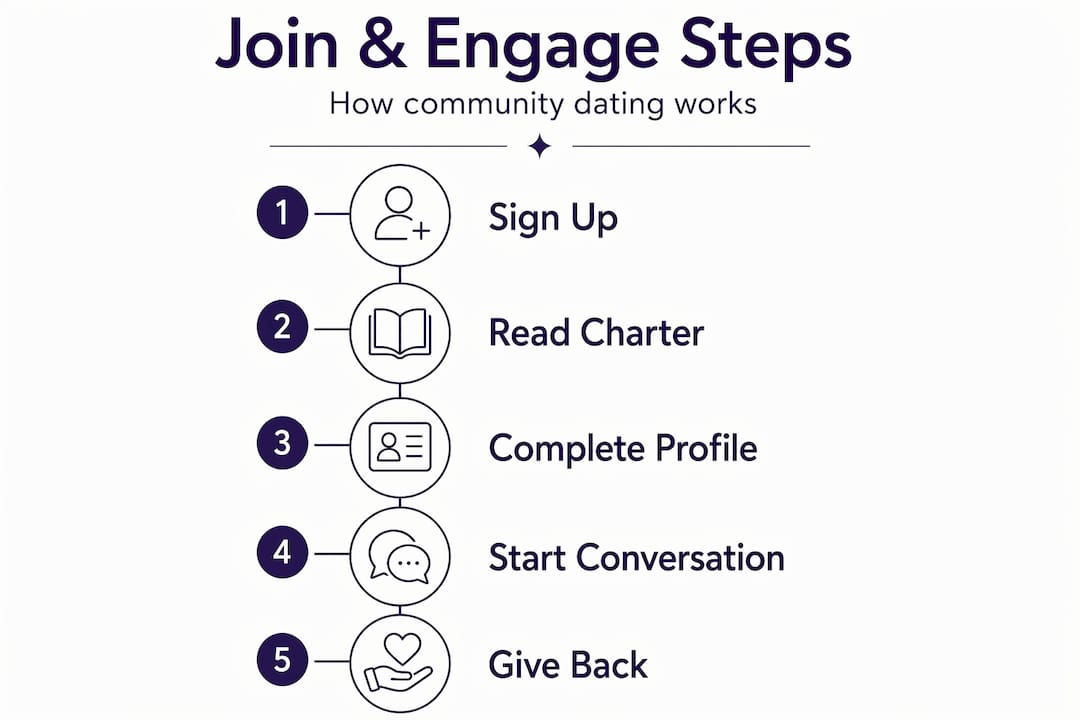
How to join and engage step by step
Once you've chosen a platform, the actual process of joining is straightforward. What matters is how you show up once you're inside.
Getting started:
- Create your profile with honesty, not performance. Write about what you actually care about, not what you think sounds appealing.
- Read the community charter before posting or messaging anyone. This is not optional. It's the foundation of trust in these spaces.
- Set your interest filters and community tags thoughtfully. SURF users, for example, filter by lifestyle tags like backpacking or pilates to find people who share their world, not just their location.
- Start with community spaces before jumping into direct messages. Group discussions and events let you show who you are naturally.
- Engage with care. Respond thoughtfully, ask real questions, and resist the urge to mass-message.
Once you're active:
- Participate in community events or discussions, even as a listener at first.
- Use the platform's reporting tools if something feels off. Good platforms want to hear from you.
- Respect the one-account rule. Platforms like HitchHive prohibit multiple accounts and external platform redirection to keep the community clean.
- Move toward in-person connection when the warmth is mutual. Online closeness is real, but presence is something else entirely.
The goal is not to collect connections. It's to find a few that matter.
Pro Tip: Write your profile bio as if you're describing yourself to a friend, not marketing yourself to a stranger. Community platforms reward authenticity far more than polish.
Common challenges and how to handle them
Every platform has friction. Knowing what to expect keeps you from giving up too early.
Here are the most common challenges people face when they join local dating groups or niche communities:
- Slow response times. Niche platforms have smaller user bases by design. This is not a flaw. It means the people who are there are genuinely invested. Give it time.
- Oversharing too soon. The warmth of community spaces can make it tempting to open up fast. Pace yourself. Trust is built through consistency, not confession.
- Ignoring community guidelines. Even well-meaning members get flagged for missing a rule they didn't read. Read the charter. Then read it again.
- Misreading moderation. If your content gets removed, don't assume bad faith. Most platforms have structured appeals. Use them calmly and clearly.
- Staying stuck online. The richest connections in community-based relationship building eventually need to breathe in real life. Don't let the comfort of a screen become a wall.
"The door to this room is small on purpose. The people who fit through it are exactly the ones who belong here."
Privacy deserves its own mention. Use a display name rather than your full name until trust is established. Be thoughtful about what photos you share early on. Platforms with decentralized identity systems, like MeetMarket's no-stored-email model, give you structural protection. But your own habits matter just as much.
What to expect after you join
The timeline for meaningful connection in community spaces is different from mainstream apps. Here's a realistic picture:
| Timeframe | What typically happens |
|---|---|
| Week 1 | Profile setup, reading community norms, first introductions |
| Weeks 2 to 4 | Joining discussions, identifying compatible members, early messaging |
| Month 2 | Deeper conversations, attending community events, building familiarity |
| Month 3 and beyond | Genuine closeness, potential offline meetups, community contribution |
The signs that things are working look different here too. It's not about match counts. It's about whether conversations feel reciprocal, whether you feel seen, and whether the community itself feels like a place you want to return to.
Giving back matters. The platforms that thrive do so because members contribute. Share what you know, welcome newcomers, and participate in governance when the option exists. MeetMarket attracted over 12,000 signups in 48 hours partly because early members helped shape the culture, not just consume it.
As your needs evolve, so can your communities. There's no rule that says you belong to just one.
My honest take on why these platforms matter
I've watched a lot of people cycle through mainstream apps and come away feeling worse about themselves, not better. The apps aren't broken. They're just optimized for engagement, not connection. Those are very different things.
What I've seen work, again and again, is when someone stops trying to appeal to everyone and starts looking for the room where they already belong. Niche community platforms do something that big apps structurally cannot: they make you feel like your presence is wanted, not just counted.
The privacy piece is something I feel strongly about too. Decentralized identity systems and on-device data storage are not just technical features. They're a statement about who the platform trusts. When a platform says your data belongs to you, that changes the whole relationship.
My honest advice: don't treat joining a community-based platform like downloading another app. Treat it like walking into a room full of people who share something real with you. Show up that way, and you'll get something real back.
The connections that have meant the most to people I know didn't come from the biggest platforms. They came from the smallest, most intentional ones.
— KEITHEN
Find your people with Sidefocusapp
If you're a man who identifies as a Side, you already know that most platforms weren't built with you in mind. Sidefocusapp was.
Sidefocusapp is built specifically for men who want closeness, warmth, and genuine intimacy without the pressure of traditional roles. It's not a hookup site. It's not a mainstream app. It's a community where presence and care come first, and where unlimited messaging means conversations can actually go somewhere. No app store required. No performance. Just connection that feels like it means something. If you're ready to stop swiping and start belonging, get started here and see what it feels like to be in the right room.
FAQ
What is a community-based dating alternative?
A community-based dating alternative, also called a niche or interest-based dating platform, is a space built around shared identity, values, or lifestyle rather than broad appeal. These platforms prioritize meaningful connection and belonging over volume of matches.
How is community-driven matchmaking different from regular apps?
Community-driven matchmaking uses interest filters, shared identity, and moderated spaces to connect people intentionally. Unlike mainstream apps optimized for engagement, these platforms focus on closeness and compatibility within a specific group.
Are community dating platforms safe to use?
Most reputable platforms publish community charters with clear moderation policies, including content removal, suspension, and ban procedures. Platforms with decentralized identity systems also give users stronger data privacy and ownership.
How long does it take to find real connections on niche platforms?
Most users begin building genuine familiarity within the first two months, with meaningful offline connections often forming by month three. Smaller user bases mean slower starts but higher-quality engagement overall.
Can I join a community-based dating platform without installing an app?
Yes. Several platforms, including Sidefocusapp, are accessible directly through a browser without requiring app store installation, removing a significant barrier to entry for new members.