Finding a relationship community platform that feels intentional and safe without performative rules or intrusive algorithms is frustrating. Most platforms trade intimacy and member control for scale, ads, or automation that can limit trust and presence. You can match the tone, privacy level, and features of six relationship community spaces to what helps you belong.
Table of Contents
SideFocus
At a Glance
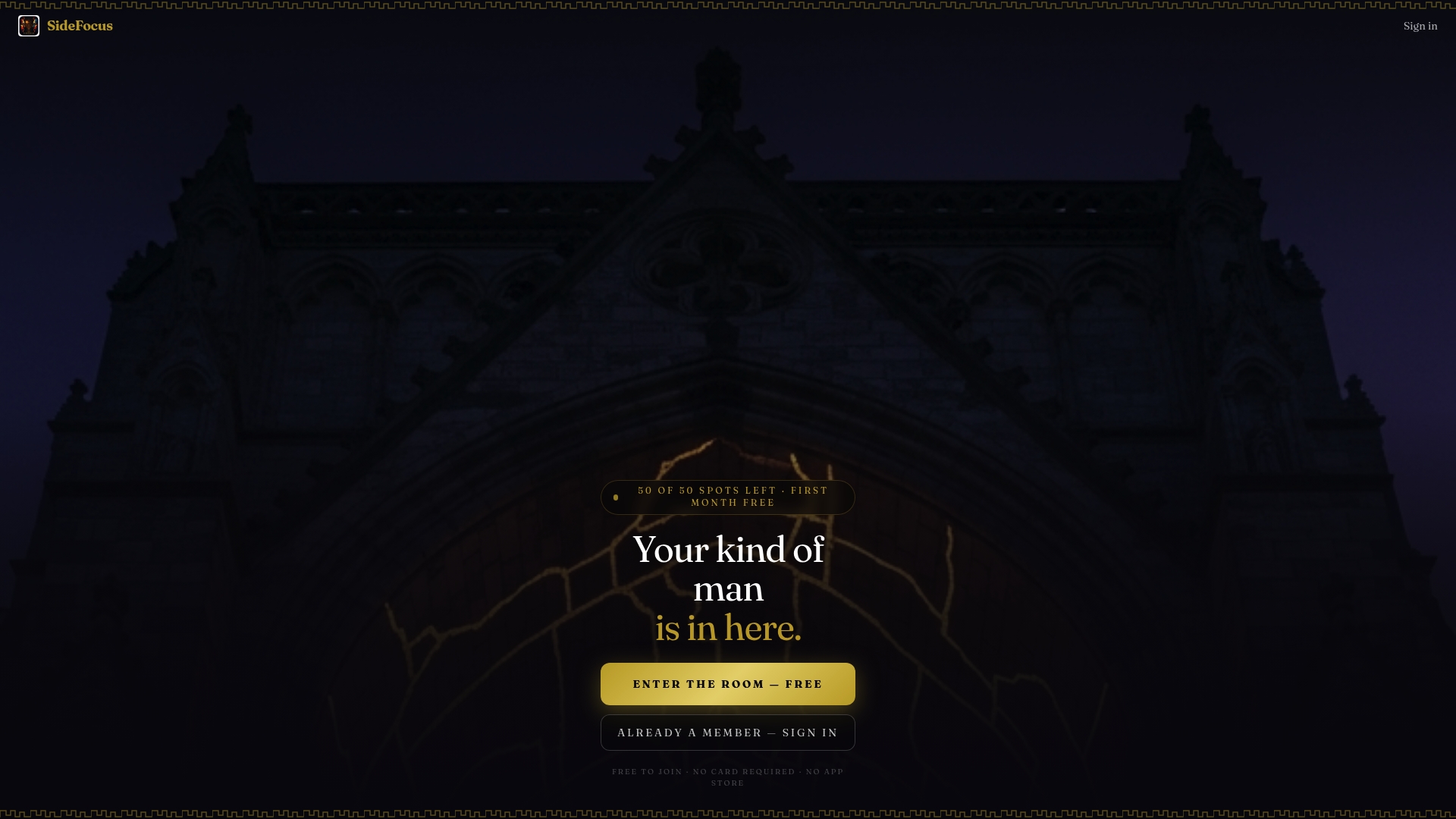
SideFocus limits membership to 50 slots at a time to keep the space small and intentional. The site runs in a browser, so there is no app required and no ads. Paid members get unlimited messaging and access to community posts. The environment centers on closeness rather than dating scripts.
Core Features
SideFocus provides a private online room where men can post and converse and shape community norms. The platform supports unlimited messaging and community posts for paid members, and it runs directly in a browser, so there is no app required. Membership options include a free tier plus monthly and yearly plans and a first month free offer for new members.
Key Differentiator
Built by and for the community, SideFocus emphasizes intimacy without roles and scripts while operating directly in browsers without apps or ads. That structure hands moderation and cultural direction to members instead of outside investors. The result is a smaller, member-shaped space aimed at longevity and private connections.
Pros
SideFocus keeps conversations private and member-led, which makes threads feel intentional rather than performative. The browser-first access removes app store friction and lowers visibility for anyone who prefers outside-the-app privacy. The platform highlights strict child safety policies and privacy standards, and the free first month lowers the barrier to try the community without immediate payment.
Cons
- Membership slots are limited to 50 at a time, which can delay entry for newcomers.
Who It's For
Gay men who want role-free closeness and community-shaped rules will get the most from SideFocus. The platform fits people who value sustained conversation over quick matches and who prefer private, ad-free spaces accessed through a browser. It also suits members who are comfortable with a capped community size.
Unique Value Proposition
Membership slots limited to 50 at a time create a deliberately small room where moderators and members can maintain tone and standards. That cap makes each new entry meaningful and helps preserve intimate threads and longer conversations. For people who want fewer profiles and deeper contact, this model changes how a community feels during everyday use.
Real World Use Case
A man who wants a private place for slow conversation joins SideFocus from his browser. He uses the free month to test messaging and posts. After engaging with a few members, he upgrades to a paid plan to send unlimited messages and keep those threads active in an ad-free setting.
Website: https://sidefocusapp.com
Komyūn
At a Glance
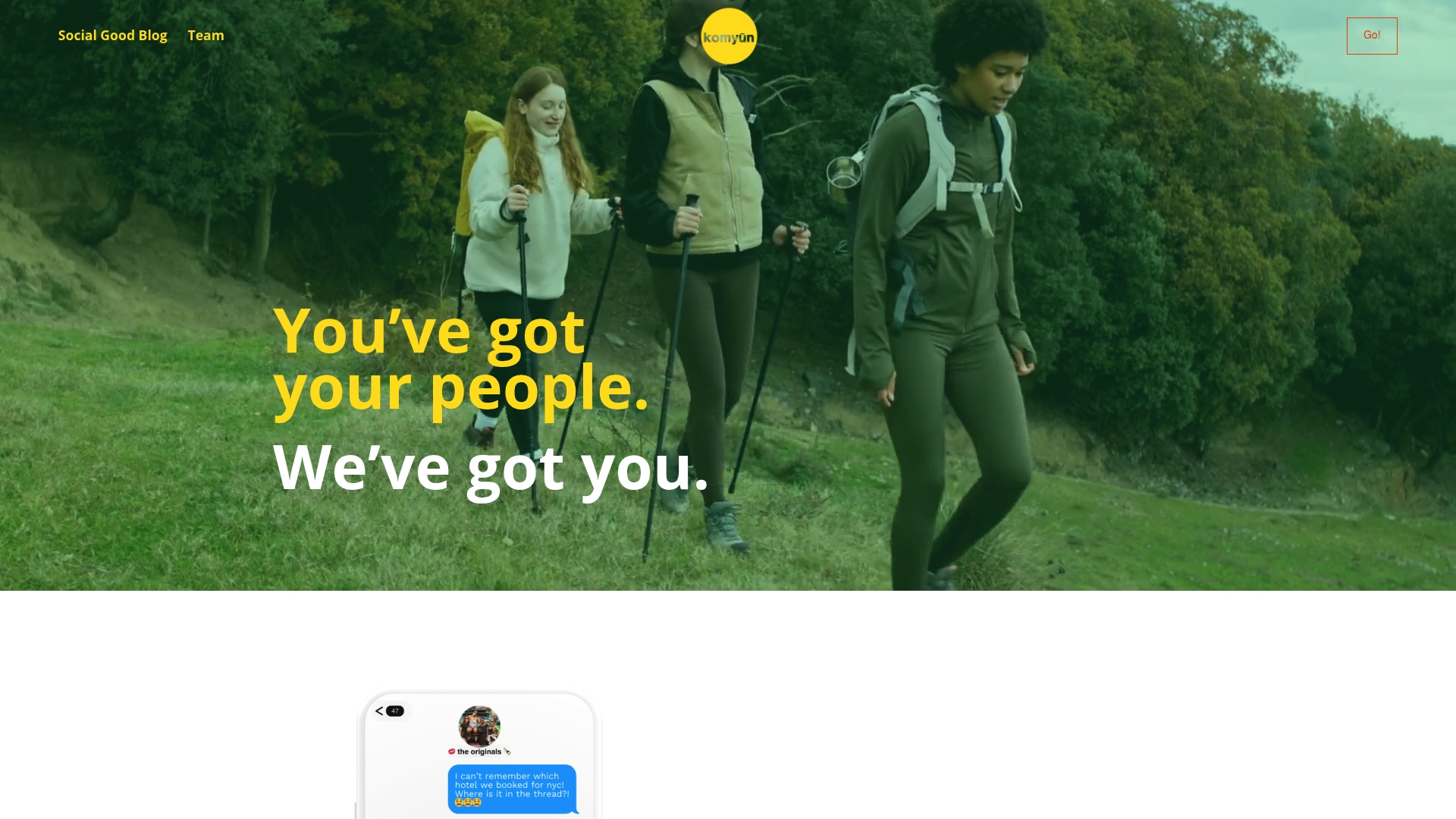
No ads and no algorithm form the platform's central promise, not a tag line. Komyūn centers trust, transparency, and purpose built tools for small groups and organizers. The app runs on iOS, Android, and desktop so members can join from phones or laptops.
Core Features
Komyūn combines event planning, location sharing, and community recommendations into one space. Create and manage gatherings with volunteers and RSVPs using Events, save and share favorite places with Spots, and circulate books, routines, and swaps through Trusted Recs. The interface keeps feeds intentional by avoiding algorithmic sorting and advertising.
Key Differentiator
The platform prioritizes communal decision making over engagement metrics. Komyūn frames social features around shared purpose and public trust rather than content ranking. That stance shifts control to moderators and members and reduces noise in groups that want clear coordination and mutual care.
Pros
Komyūn emphasizes authentic member interactions by removing ads and algorithmic feeds. That choice supports quieter, more deliberate threads and clearer event coordination for organizers. Cross platform access on iOS, Android, and desktop keeps volunteers and remote members connected without forcing app store downloads for every device.
Cons
-
Limited third party integrations are listed. That restricts automation and connections with calendar or volunteer management tools.
-
The feature set can feel basic for large chapters or enterprise teams. Advanced roles and reporting are not described.
-
Pricing details are not published. That leaves questions about paid tiers or limits for bigger communities.
When It May Not Fit
Groups that rely on calendar sync, single sign on, or automation will probably need additional tools. Large organizations needing granular permissioning and enterprise reporting may find Komyūn too lightweight. Communities that require transparent pricing and contract terms will want clearer billing information before committing.
Who It's For
Community organizers, small nonprofits, neighborhood groups, and micro communities that value trust and low noise will find this platform relevant. Moderators who prefer deliberate scheduling and member driven recommendations will benefit. People seeking ad free spaces for coordination and resource sharing will feel at home.
Real World Use Case
A volunteer organization runs local clean up days and needs a simple hub for invites, volunteer sign ups, and supply drop locations. Komyūn hosts the event threads, tracks volunteer roles, and stores meeting spots for repeat use. Members exchange vetted recommendations for tools and routes without an algorithm pushing unrelated posts.
Website: https://komyun.co
Naidus
At a Glance
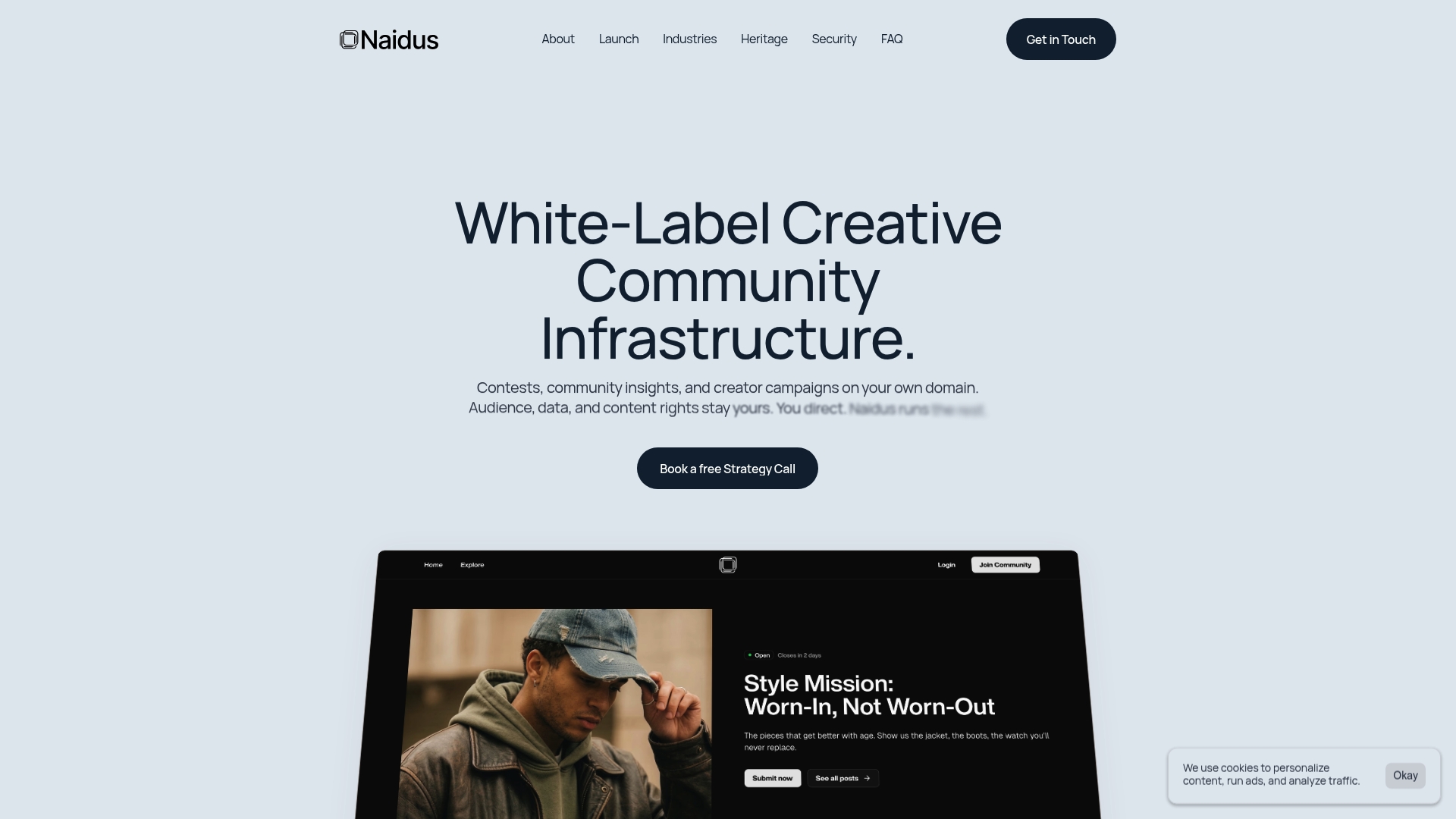
Full content ownership stays with the client, including rights cleared submissions and built in consent capture. The vendor advertises rapid deployment that can go live in days on a branded domain. The platform emphasizes GDPR compliance and data sovereignty for creative, retail, gaming, and cultural brands.
Core Features
Naidus launches branded community hubs on your domain with customizable branding and member workflows. It includes engagement tools for threads, campaigns, and submissions alongside AI moderation to reduce moderator workload. The platform also offers CRM integration for first party lead capture and inbuilt license and consent capture for multimedia contributions.
Key Differentiator
Designed by community builders with operational experience, Naidus focuses on owned audiences and practical operational workflows rather than public social feed mechanics. Its mix of domain hosting, automated moderation, and rights management keeps content and data under brand control. That operational angle reads more like a community operations kit than a generic forum template.
Pros
Built by experienced community professionals, Naidus brings operational know how into product features and launch support. Full data sovereignty and explicit GDPR compliance give marketing teams control over first party profiles and consent records. The platform advertises fast launch times, and that claim pairs with transparent rights handling to simplify campaigns that collect user photos, videos, and ideas.
Cons
-
Platform tooling assumes active community management. Teams without experience will need time to build processes and moderation routines.
-
Complex custom integrations are scoped per client. That approach can extend setup timelines compared with out of the box connectors.
-
The product targets owned community building rather than mass social audience growth. It may not fit projects that need viral, platform scale.
When It May Not Fit
If you lack a branded subdomain or do not have a clear community strategy input, Naidus will require more setup work. Projects that need many bespoke integrations or specific EU hosting stipulations can face longer timelines. If your aim is to reach mass social audiences quickly, this owned platform model may not match that objective.
Who It's For
Marketing teams and community managers at creative and cultural brands will get the most from Naidus. You should have someone ready to run community operations and shape participation workflows. Brands in retail, gaming, and arts that want first party data and rights cleared content will find its controls useful.
Real World Use Case
According to the company, Fotografiska built a fully branded community platform with Naidus to host emerging artists, retain content ownership, and collect consented submissions. That project reportedly drove rapid growth and higher engagement while keeping profiles and rights under the museum's domain.
Website: https://naidus.io
Skool
At a Glance
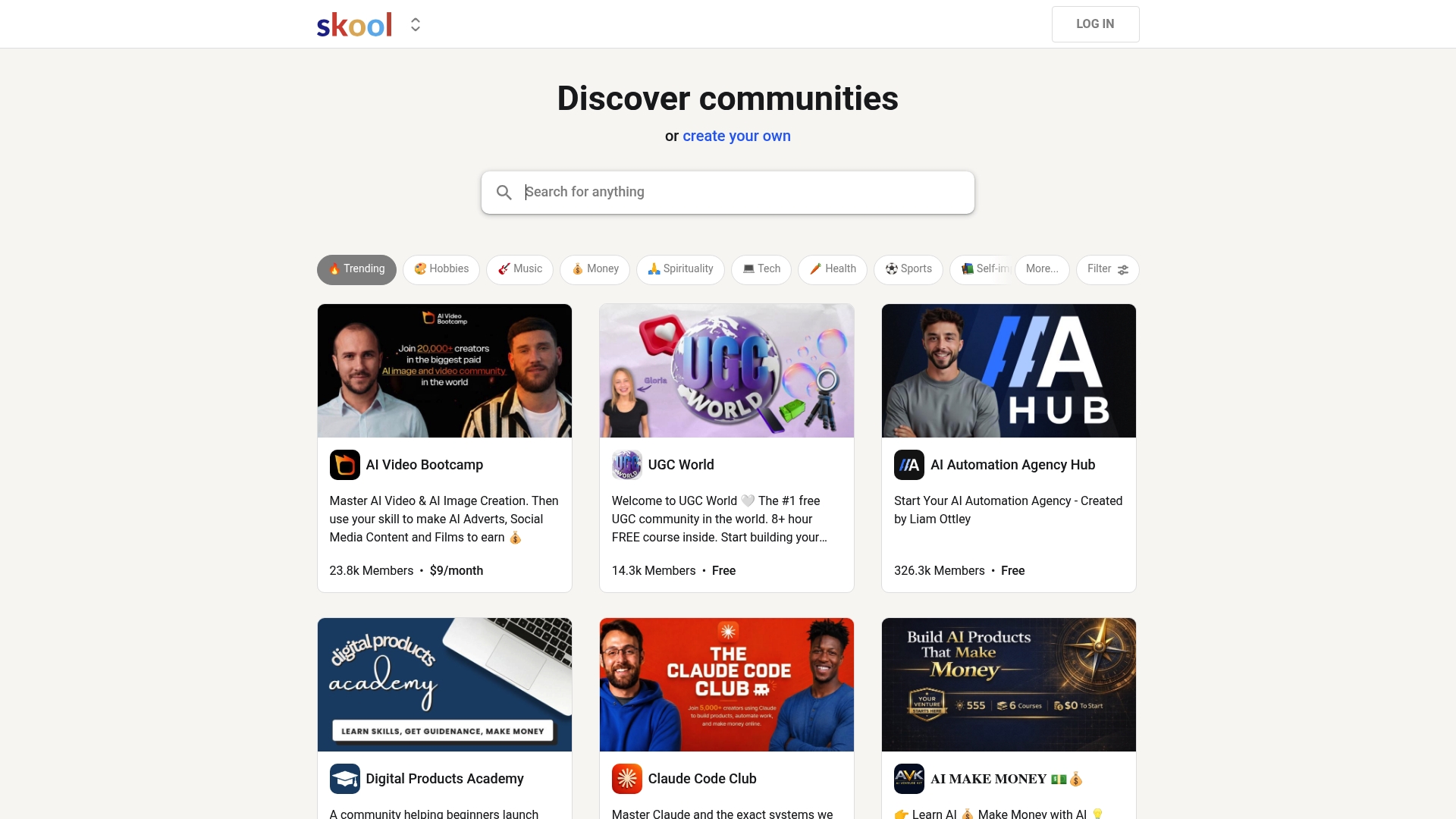
Skool runs an auto affiliate program that lets community owners earn commission from member groups created by others. It bundles course hosting, discussion forums, event scheduling, and a single-search box to find posts and members. Email broadcasting reaches all members with one click. Built in gamification rewards participation and nudges people to return.
Core Features
Skool offers discussion forums with posts, comments, media, polls, and notifications, so conversations stay visible and archived. Its course hosting includes searchable transcripts, progress tracking, and resource libraries that match lessons to member progress. Event scheduling supports timezones and reminders. Messaging, email broadcasting, unified member profiles, and a metrics dashboard handle everyday community operations and reporting.
Key Differentiator
Skool combines community management, course delivery, and engagement automation with built in monetization tools. That mix keeps learning and conversation inside a single space, which lowers friction for members and moderators. The affiliate program plus points and levels give owners concrete ways to reward and monetize activity.
Pros
Skool keeps discussion, courses, email, and events in one place so you stop switching among tools. The interface is easy to use, which helps new members find courses, threads, and events quickly. Built in gamification and one click broadcasting make it simple to prompt participation, and branding options let owners keep the group visually consistent.
Cons
-
Some features like integrations and product pages returned 404 errors, which suggests parts of the ecosystem are incomplete or broken.
-
Pricing could be high for small or individual creators at higher tiers, making it harder to test with a tiny membership.
-
Limited customization exists for certain layouts and components, so advanced designers may find the options narrow.
When It May Not Fit
If you need deep extensibility or third party plugins, Skool may frustrate you because integrations appear limited or unavailable. Small scale creators who must minimize monthly costs may find higher tiers expensive. If you require pixel perfect layout control, Skool’s customization limits could block that work.
Who It's For
Skool suits community builders, online educators, creators, and entrepreneurs who want courses and conversation in one place. It matches owners who value simple administration over granular customization. It also fits creators who want built in monetization like memberships and affiliate commissions.
Real World Use Case
A professional coach runs a paid membership on Skool where clients access courses, join live and asynchronous discussions, and attend scheduled sessions. The coach uses progress tracking and searchable transcripts to keep content usable across cohorts. Points and rewards encourage clients to stay engaged and refer others through the affiliate program.
Website: https://skool.com
Mighty Networks
At a Glance
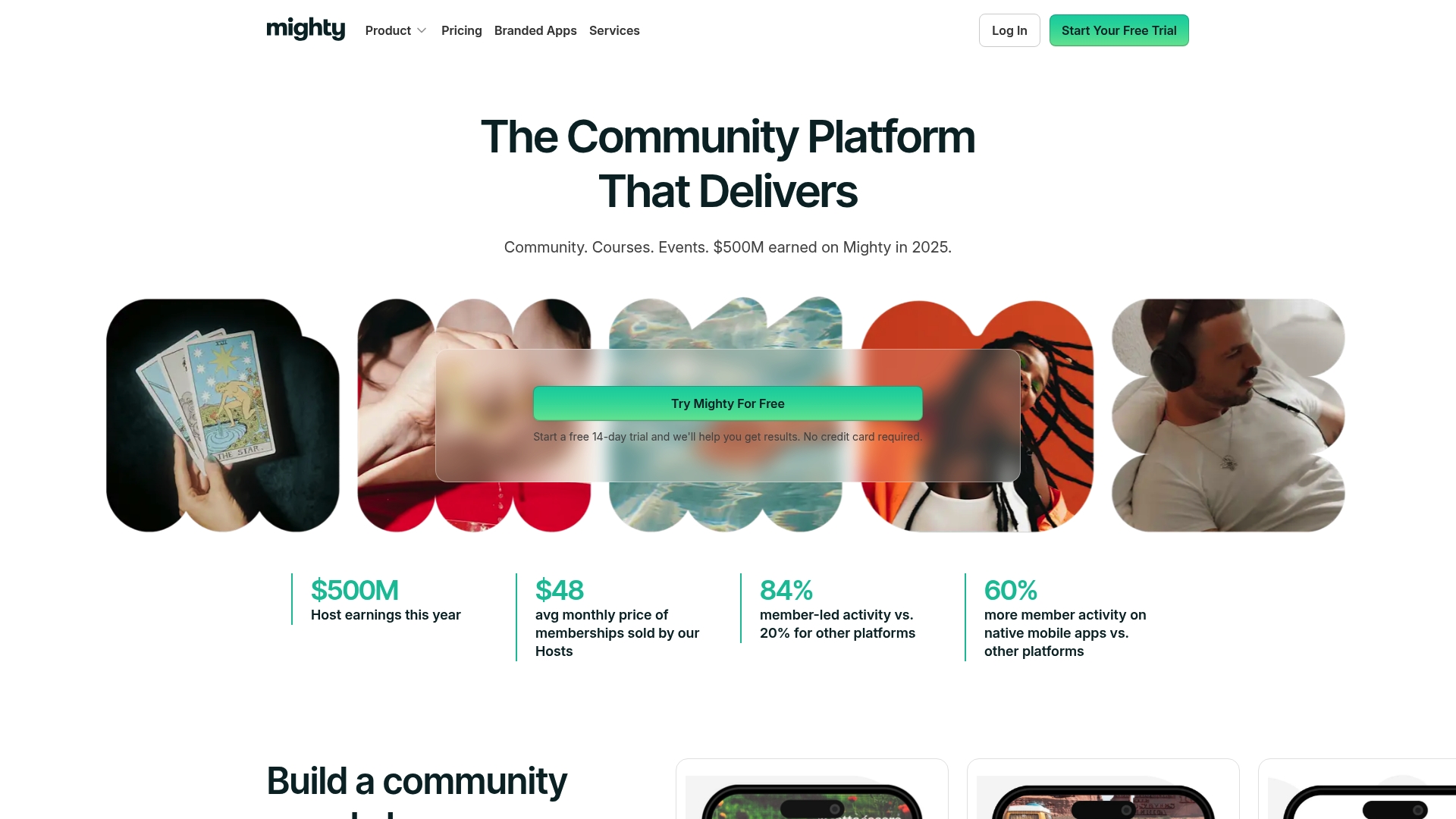
Mighty Networks reports $500 million in community earnings in 2025. This figure highlights the platform's focus on monetized membership and paid courses. The product centers on mobile-first communities and member-led activity rather than broadcast-style feeds.
Core Features
Mighty Networks offers native mobile apps for iOS and Android, membership tools, and threaded conversations that keep members returning. It pairs a Community Design™ framework with engagement features like questions, polls, and badges to shape how members interact. Automated onboarding, recognition workflows, and an AI Cohost help reduce manual moderation and content planning.
Key Differentiator
The platform positions its mobile apps as the engine for habitual engagement. That design makes the community feel like a place you drop into, not a bookmarked webpage. For creators who want push-driven, mobile activity, this emphasis changes how members show up.
Pros
Mighty Networks reports 84% member-led activity and 60% more activity on mobile, which suggests its mobile focus drives participation. The platform supports branded mobile apps and deep customization, so you can present memberships and courses under your name. Integrated automations and analytics help creators run events, launch paid tiers, and scale without adding a full-time community manager.
Cons
- Pricing may be high for small or new creators. This can pressure solo builders on tight budgets.
- Migration and setup can be complex for non-technical people. Moving threads, members, and course content takes planning.
- Heavy reliance on automation and design strategies requires training. Some groups will need time to learn workflows and configuration.
When It May Not Fit
If you want a very small, intimate private room for personal connections like what Sidefocusapp targets, this platform may be more than you need. If your budget cannot support branded mobile apps or higher tiers, the platform can feel costly. If your team lacks technical bandwidth, migration and onboarding will slow launch timelines.
Who It's For
This platform suits creators, educators, and organizations aiming to grow paid, active communities on mobile. Choose it if you plan memberships, courses, or recurring events and want tools for engagement automation. If your priority is a tiny private circle focused on personal intimacy, this product targets a different scale.
Real World Use Case
According to the company, a parenting community grew to 102,000 members in two years and generated over $5 million in revenue. That group used Community Design™, branded mobile apps, and automation to run paid tiers and regular events. The example shows how growth, mobile engagement, and paid memberships can combine when strategy and tools align.
Website: https://mightynetworks.com
Bettermode
At a Glance
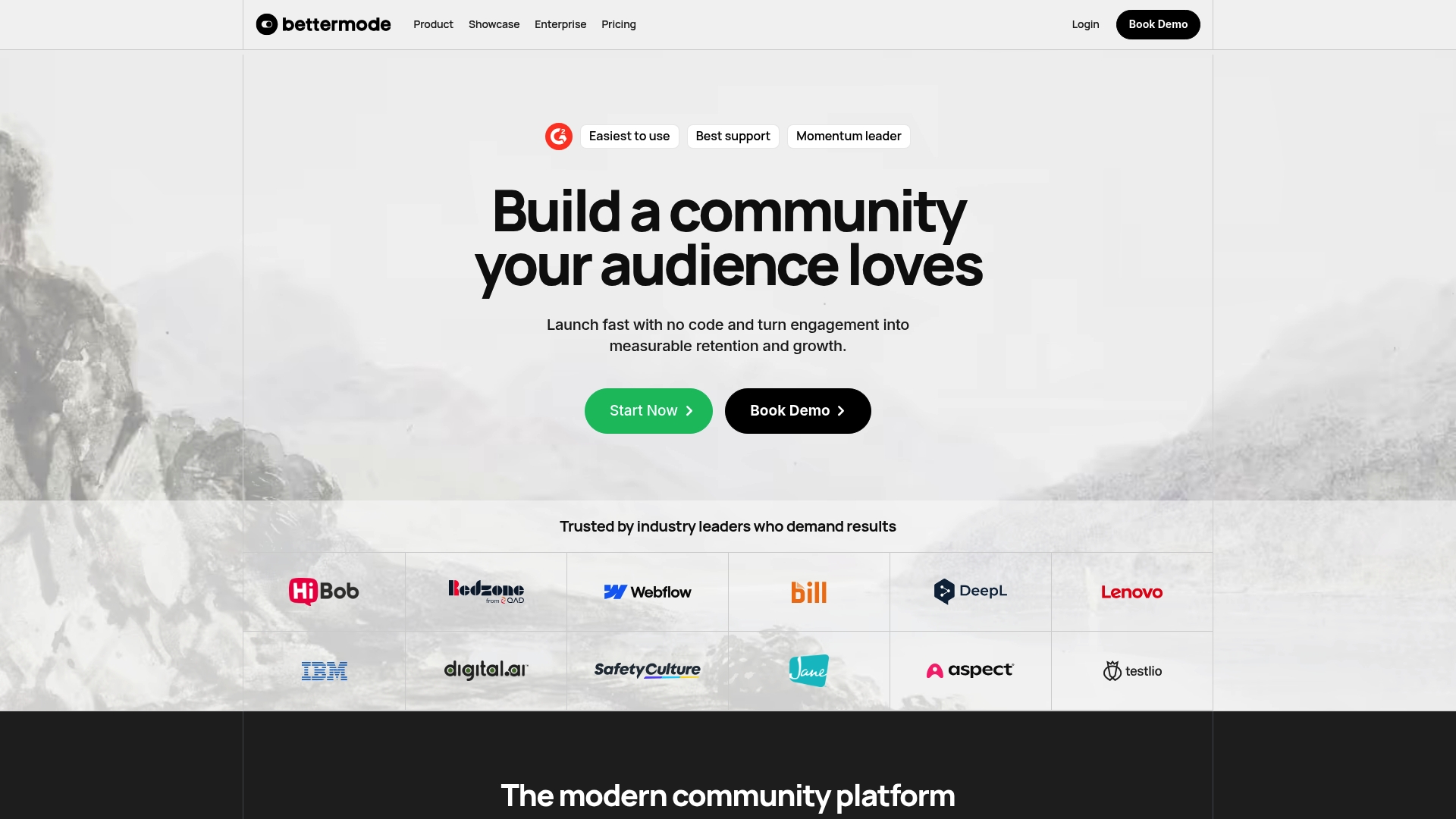
Chat, AI search, gamification, a member directory, and a spaces-based CMS all sit alongside out of the box integrations with Salesforce and HubSpot. The platform targets organizations that need branded communities with enterprise security and dedicated onboarding. That combination makes it a common choice for companies moving community work into marketing and support teams.
Core Features
Bettermode combines threaded chat and direct messaging with a content management system organized into spaces for programs, products, and interest groups. It includes AI search to surface past discussions, a Member Directory for profiles and segmentation, and Spaces to structure knowledge and events. The platform also offers automations, moderation controls, leaderboards, and analytics for measuring engagement.
Key Differentiator
The platform emphasizes no code, drag and drop customization paired without of the box enterprise integrations. That approach suits organizations that want a white label community without a heavy developer backlog. Compared with Meld.community, Bettermode skews toward teams that need tighter CRM and support tool connections.
Pros
Bettermode is quick to launch because community managers can assemble pages and spaces without developers. The integration set links members and threads back into Salesforce, Slack, and HubSpot which helps teams tie community activity to retention and support workflows. Security and onboarding services aim to meet enterprise needs while gamification and leaderboards help keep members active.
Cons
- Buyer reviews report inconsistent quality in customer support at times.
- High tier plans may be costly for very small organizations.
- Lower plans include limited moderation features compared with enterprise options.
- Complex integrations can require technical expertise to implement correctly.
When It May Not Fit
If you run a tiny community on a tight budget, the higher plan structure may not make sense. If moderation needs are strict and you cannot move to an enterprise plan, the feature set may feel thin. If your team lacks any technical resource, complex integrations could slow the project down.
Who It's For
Organizations that want a branded, no code community tied to CRM and support tools will find Bettermode a good match. Product and customer success teams aiming to reduce ticket volume and capture advocacy data will benefit from the integrations. It fits groups that prefer managed onboarding and enterprise security commitments.
Real World Use Case
A SaaS company set up a branded customer community to lower support load and surface product advocates. The team used Spaces for release notes, AI search for answers in threads, and Salesforce integration to surface high value members. Moderators ran gamified programs and analytics showed which topics reduced ticket volume.
Website: https://bettermode.com
Comparison of alternatives
Among platforms fostering online community connection, SideFocus delivers a uniquely personal member experience with tightly controlled access encouraging intimacy and dialogue. This comparison examines key features and tradeoffs to help you identify which platform aligns best with your needs.
Event Planning and Coordination Strengths
Komyūn stands out in offering features for community event facilitation. Tools such as event management, location sharing, and curated recommendations empower organizers to efficiently coordinate volunteer efforts and foster reliable connections among teams. In contrast, SideFocus emphasizes prolonged private interactions without specific event-based tools, catering more to interpersonal communication.
Depth in Branding and Content Ownership
Naidus offers specialized features for brands requiring community hubs with customizable domains. Tools for multimedia content licensing and GDPR-compliant workflows make it suitable for creative industries. SideFocus, while fostering a customizable room for dialogue, doesn’t provide integrated branding and ownership features critical for enterprise branding.
Best fit
- Gay men preferring sustained, private dialogue and zero advertising will value the intentional intimacy fostered by SideFocus.
- Volunteer organizers prioritizing event and resource tools will find Komyūn’s coordination features effective for planning and engaging teams.
- Cultural brands requiring branded domains and consent workflows will leverage Naidus’s managed hosting and clear ownership support.
- Creatives merging education, engagement, and rewards under a single interface will appreciate Skool’s convergence of discussion forums and course hosting.
Our pick
SideFocus is the recommended choice where private, intentional, and community-driven member experience matters most. If exclusivity and genuine connection with no advertising appeal to your community goals, this platform provides clarity and sustainability in interaction quality. Groups requiring branded or event-driven extensibility may choose Komyūn or Naidus instead as fitting alternatives.
Sidefocusapp excels in fostering genuine community connections through its focus on user-led moderation and ad-free browser-based access.
| Platform | Core Feature | Key Differentiator | Best For | Notable Limitation |
|---|---|---|---|---|
| Sidefocusapp | Community posts, unlimited messaging | Member-led moderation, browser-based access | Men valuing intimate connections | Membership capped at 50 users |
| Komyūn | Event planning and location sharing | Ad-free and algorithm-free user interface | Small community event organizers | Limited third-party integrations |
| Naidus | Customizable branded domains | GDPR compliance, full content ownership | Creative and cultural brands | Requires skilled community management teams |
| Skool | Discussion forums and course hosting | Built-in gamification and affiliate programs | Educators and course managers | Limited customization for advanced designs |
| Mighty Networks | Native mobile apps for engagement | Push-driven mobile-centric community activities | Large paid creator communities | Pricing tiers might be high for small creators |
| Bettermode | Spaces-based content management | No-code customization, enterprise integrations | Organizations using CRM systems | Customer support quality inconsistencies reported |
How to Find a Community That Feels Like Home
Choosing the right space depends on what matters most to you. Many men who seek closeness without the pressure of scripted roles want a private, small, and ad-free environment. Sidefocusapp meets that need by limiting membership to keep the room intentionally intimate. It offers unlimited messaging and a browser-based experience that removes app store barriers.
Sidefocusapp supports genuine conversations tailored for men who identify as “Sides.” This approach creates a place for warmth and presence rather than quick matches. If you want fewer profiles but deeper connection, Sidefocusapp creates that room. Visit Sidefocusapp now and see how this unique community shapes closeness on your terms.
Try Sidefocusapp today and start messaging without limits in a private, welcoming space.
FAQ
What unique benefits does Sidefocusapp provide for community engagement?
Sidefocusapp offers a private online room where men can post and converse without dating scripts. This feature supports unlimited messaging and community posts for paid members, encouraging meaningful connections. If you’re seeking a community focused on intimacy, Sidefocusapp is an excellent option to explore.
How does Sidefocusapp compare to Komyūn in terms of community organization?
Komyūn emphasizes authentic member interactions with features like event planning and location sharing, tailored for small groups. In contrast, Sidefocusapp is specifically designed for men seeking role-free closeness and private, ad-free conversations, making it a better fit for those focused on sustained dialogue rather than event coordination.
Which community features are exclusive to Sidefocusapp?
Sidefocusapp limits membership to 50 slots, creating a small, intentional community where members shape norms. This design fosters deeper engagement and closeness compared to larger platforms. Joining Sidefocusapp allows you to be part of this intimate environment enriched by member-led traditions.
Can I access Sidefocusapp without downloading an app?
Yes, Sidefocusapp operates directly in a browser, meaning no app download is required. This browser-first access simplifies engagement by lowering visibility for those who prefer private conversations without the hassle of app store navigation.
What options are available for joining Sidefocusapp?
Membership options for Sidefocusapp include a free tier with a first month free offer for new members. This setup reduces the commitment barrier, allowing potential members to test the community before deciding on paid plans.