App-free dating is defined as any approach to romantic connection that bypasses swipe-based platforms entirely, including IRL events, friend introductions, and curated matchmaking. It is growing because 78% of dating app users now report emotional, mental, or physical exhaustion from those apps. That number is not a blip. It is a signal that the swipe model is breaking down, and people are looking for something that feels more like closeness and less like a second job. This article explains why app-free dating is growing, what the data shows, and how you can start exploring it today.
Why app-free dating is growing: the burnout behind the shift
The frustration driving people away from dating apps is not just anecdotal. Stressors like communication overload, information irrelevance, and technological vulnerability all contribute to what researchers call social media exhaustion on dating platforms. That exhaustion directly increases the intention to quit. This is not about being bad at dating. It is about a system designed to keep you swiping, not to help you connect.
Dating apps are built around engagement metrics, not relationship outcomes. Sociologists at Toronto Metropolitan University describe the business model as one that prioritizes data collection and interaction volume over genuine relationship building. The result is a product that feels like it cares about you but is actually optimizing for your screen time. That mismatch is exhausting in a very specific way.
The emotional toll resembles burnout from a stressful job. Users report cynicism, inefficiency, and a creeping sense that the whole thing is pointless. Younger cohorts feel this most acutely, with burnout rates running even higher than the overall average. Here is what drives the cycle:
- Communication overload: Dozens of open conversations with no clear direction
- Information irrelevance: Profiles that tell you almost nothing real about a person
- Gamified swiping: Dopamine hits from matches that rarely lead anywhere
- Ghosting and ambiguity: No shared context means disappearing is frictionless
"Dating apps were supposed to make finding love easier. Instead, many users feel like they're working a second shift with no paycheck." — BBC Future, 2026
The gap between what apps promise and what they deliver is exactly why the growing preference for app-free dating makes so much sense.
How app-free methods create more authentic connection
Switching away from apps does not just remove stress. It actively creates the conditions for real closeness. Shifting from apps to offline methods moves the dating funnel from many shallow interactions to fewer, higher-quality conversations. That shift reduces inbox fatigue and improves the actual odds of connection. Fewer options, handled with more care, produce better results.
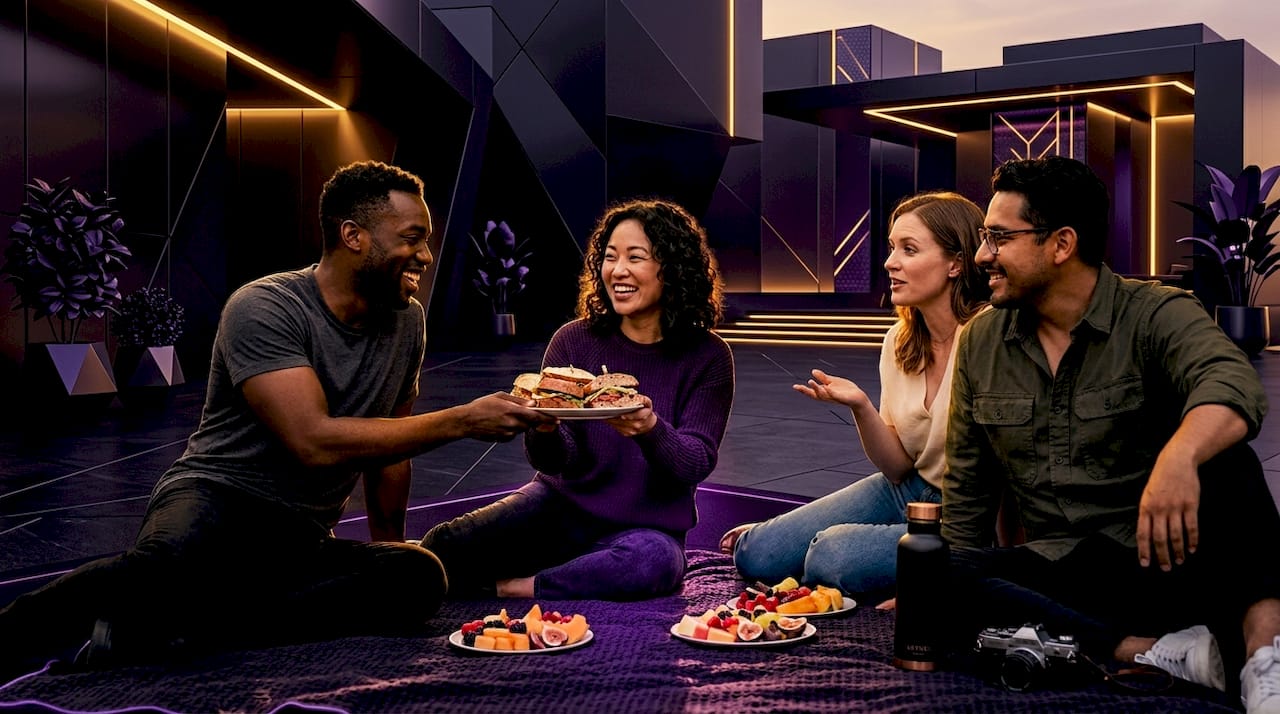
One of the clearest benefits of app-free dating is the role of social vetting. Events like the "Date My Friend" series in New York operate on a simple premise: your friends know you better than an algorithm does. When a trusted person vouches for a potential match, you inherit their credibility. That inherited trust reduces the ambiguity that makes app dating so exhausting.
Shared physical environments also change the dynamic entirely. Real-time presence means you read tone, body language, and energy in seconds. Ghosting becomes socially awkward rather than effortless. Misinterpretation drops because you are not decoding a text message at midnight. The human friction that apps remove is actually the fuel for authentic connection.
- Reduced choice overload: Fewer options improve decision quality and reduce regret
- Social endorsement: Friend setups and curated events carry built-in trust
- Real-time cues: In-person interaction eliminates the ambiguity that drives ghosting
- Memorable stories: App-free matches tend to produce the kind of "how we met" stories that swipe interactions rarely generate
Pro Tip: If you are attending an IRL dating event for the first time, bring one friend who can introduce you to others. Social warmth transfers. Walking in with someone who knows people makes you feel like you already belong.
The benefits of app-free dating platforms extend beyond the emotional. They also reduce the cognitive load of managing multiple conversations across multiple interfaces. One real conversation beats twenty half-hearted text threads every time.
What trends and data show about app-free dating in 2026
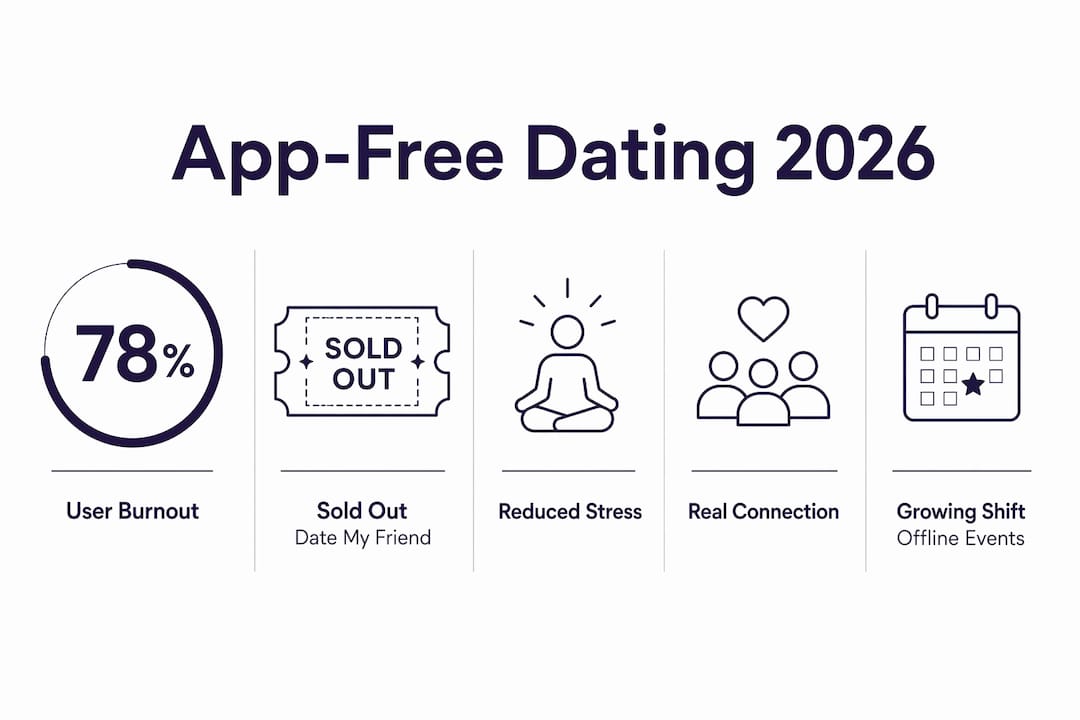
The numbers behind this shift are real. The "Date My Friend" event series launched in January 2026 and sold out consistently through March. That kind of demand does not happen by accident. It reflects a genuine appetite for something warmer, more personal, and more human than a profile grid.
| Trend | What it shows |
|---|---|
| "Date My Friend" sold-out events (Jan–Mar 2026) | Strong demand for curated, IRL dating formats |
| 78% of app users reporting burnout (Forbes/BBC 2026) | Mainstream app model is failing its own users |
| Match Group Q1 2026 user decline | Even the largest platforms are losing ground |
| App-free hotel check-in adoption | Broader consumer shift away from app-dependent experiences |
Match Group's Q1 2026 data shows a slowed but ongoing decline in monthly active users on Tinder, with product pivots focused on re-engagement. The fact that the world's largest dating company is scrambling to retain users tells you something important about the direction of travel. Innovation at the app level is not solving the core problem.
The app-free dating trend also mirrors what is happening in other consumer categories. App-free hotel check-in technology from companies like Virdee is gaining traction because consumers are tired of downloading yet another app for a single interaction. The same fatigue applies to dating. People want presence, not another icon on their home screen.
"Enshittification" — the gradual degradation of digital platforms as they prioritize monetization over user experience — is now a recognized force shaping how people relate to apps across every category, including dating.
How social and psychological factors fuel the popularity of app-free dating
The reasons people are leaving apps go deeper than frustration. There is a psychological dimension that matters. Mental health impacts linked to dating app use are documented across a meta-analysis covering approximately 26,000 people, with worse psychological outcomes for regular app users, especially those with pre-existing vulnerabilities. That is not a small finding. It means the platform itself is a stressor.
Sociologists describe the app dating experience as a form of "McDonaldization," where intimacy gets standardized, packaged, and delivered with the warmth of a fast-food transaction. The commodification of connection alienates people who are looking for something that actually feels like care. App-free approaches restore the texture that gets flattened in a profile.
Human friction and contextual trust are the two elements most absent from app-based dating and most present in offline alternatives. Friction sounds like a bad thing, but in dating it means the small, real moments that build familiarity. A shared laugh at an event. A friend saying "you two would get along." These moments carry weight that a carefully curated profile simply cannot replicate.
The role of what insiders call "bridge people" is central to why app-free dating works so well. These are the friends, colleagues, and community members who introduce matches through social trust, acting as a living vetting system. Their endorsement does the work that an algorithm pretends to do. The difference is that a friend actually knows you.
- Distrust in algorithms: Users increasingly doubt that AI-driven matching reflects real compatibility
- Mental health motivation: Documented psychological costs of app use push people toward less stressful settings
- Desire for tactile interaction: Physical presence creates a sense of safety and realness that screens cannot replicate
- Social endorsement: Being introduced by someone you trust changes the emotional starting point of a connection
What practical steps can help you explore app-free dating today
You do not need to overhaul your entire social life to start experiencing the benefits of app-free dating. Small, intentional shifts create real momentum.
- Attend a curated IRL event. Look for friend-intro nights, singles mixers organized around shared interests, or community gatherings where meeting people is the explicit purpose. Events like "Date My Friend" show that the format works when it is designed with care.
- Ask a trusted friend to make an introduction. Tell one or two people in your life that you are open to being set up. Give them a clear, honest picture of what you are looking for. Bridge people work best when they have real information to work with.
- Join interest-based communities. Book clubs, hiking groups, volunteer organizations, and hobby classes all create the shared context that makes early connection feel natural rather than forced.
- Take a planned break from apps. A two-week pause is enough to notice how much mental space apps were occupying. Many people report feeling lighter and more present almost immediately.
- Use a matchmaking service with human curation. Human screeners bring judgment and empathy that no algorithm replicates. The process is slower, but the quality of introductions tends to be meaningfully higher.
Pro Tip: When you meet someone offline for the first time, resist the urge to immediately connect on social media. Let the in-person relationship build its own foundation first. That small boundary protects the warmth of the early connection.
For those exploring authentic online dating as a complement to offline methods, the same principles apply. Fewer conversations, more depth, and a clear sense of what you are actually looking for.
Key takeaways
App-free dating is growing because the swipe model produces burnout, not belonging, and offline alternatives restore the human context that genuine connection requires.
| Point | Details |
|---|---|
| App burnout is documented | 78% of users report exhaustion; the emotional cost of apps is measurable and significant. |
| App-free methods reduce overload | Fewer, higher-quality conversations replace inbox fatigue and ambiguous texting. |
| Social trust is the key advantage | Friend introductions and bridge people create inherited credibility that algorithms cannot replicate. |
| Mental health is a real driver | Documented psychological harm from app use motivates people to seek less stressful dating settings. |
| Practical entry points exist | IRL events, friend setups, and interest-based communities offer immediate, low-pressure alternatives. |
What I've learned watching the swipe cycle burn people out
I have watched the same pattern repeat for years. Someone downloads an app with genuine hope. Within weeks, they are managing fifteen conversations that go nowhere, feeling vaguely hollow after every match notification, and wondering why something designed for connection leaves them feeling more alone. That is not a personal failure. That is the product working as intended.
What strikes me most about the app-free dating trend is not that it is new. It is that it is old. Meeting through friends, showing up somewhere with shared purpose, being introduced by someone who cares about both of you. These are ancient ways of finding closeness. They work because they carry warmth from the start.
The hybrid future I expect is not apps disappearing. It is apps becoming less central. The people who will thrive in dating over the next few years are the ones who treat apps as one small tool rather than the whole strategy. They will spend more time in rooms where real things happen and less time optimizing their profile photos. That balance is not a sacrifice. It is a relief.
The community-based dating alternatives gaining traction right now are not a niche trend. They are a correction. And corrections, when they are this widely felt, tend to stick.
— Albert
A place built for closeness, not clicks
If what you are looking for is warmth, presence, and connection without the performance of a traditional app, Sidefocusapp was built with exactly that in mind.
Sidefocusapp is designed for men who identify as Sides, those who want genuine intimacy and emotional closeness without the pressure of conventional roles or the noise of mainstream platforms. There is no app store installation required. No gamified swiping. Just a space where you can start connecting with people who are looking for the same kind of care you are. The door is small on purpose. That is what keeps the room feeling real.
FAQ
What is app-free dating?
App-free dating refers to romantic connection methods that bypass swipe-based platforms, including IRL events, friend introductions, and curated matchmaking services. It prioritizes in-person context and social trust over algorithmic matching.
Is app-free dating actually popular right now?
Yes. Events like the "Date My Friend" series sold out consistently in early 2026, and survey data shows 78% of dating app users report burnout, signaling strong demand for alternatives.
What are the main benefits of app-free dating?
The core benefits include reduced choice overload, inherited social trust through friend introductions, real-time presence that limits ghosting, and measurably lower emotional exhaustion compared to app-based dating.
Why are people leaving dating apps in 2026?
Researchers point to communication overload, information irrelevance, gamified swiping, and documented mental health impacts as the primary drivers pushing users toward app-free alternatives.
How do I start with app-free dating if I have only used apps?
Start by telling one or two trusted friends you are open to introductions, then attend one interest-based community event per month. The shift from many shallow interactions to fewer meaningful ones happens quickly once you give it space.