Hookup culture is the prevailing mode of interaction on most major dating apps, and it dominates because platform design, business incentives, and user psychology all push in the same direction. Apps like Tinder, Bumble, and Hinge are built around swipe mechanics, gamified feedback loops, and algorithmic abundance, all of which reward casual, low-commitment behavior over genuine closeness. 72% of U.S. college freshmen participated in casual encounters as of 2026, a figure that reflects how deeply normalized this pattern has become. The emotional costs are real, and so is the longing for something warmer. Understanding why hookup culture dominates dating apps is the first step toward choosing something different.
Why hookup culture dominates dating apps by design
Dating apps are not neutral tools. They are products built around a specific revenue model, and that model does not reward you for finding love quickly.
App business models incentivize engagement over relationship success. Match Group, which owns Tinder, Hinge, and OkCupid, profits from subscriptions and in-app purchases. A user who finds a lasting partner and deletes the app is a lost revenue stream. This creates a structural conflict: the app's financial interest is in keeping you searching, not in helping you find what you came for.

The swipe mechanic makes this worse. Swiping left and right mimics the variable reward loops found in slot machines, delivering unpredictable hits of dopamine when a match appears. This is not an accident. It is a design choice that keeps users engaged without requiring emotional investment. The result is a dating environment that feels exciting on the surface and hollow underneath.
Algorithmic paradox of choice compounds the problem further. When an app presents you with hundreds of potential matches, the psychological effect is the opposite of commitment. You keep scrolling because the next profile might be better. This constant availability of options discourages the kind of emotional investment that leads to real connection.
- Swipe mechanics create dopamine-driven engagement that prioritizes novelty over depth
- Retention-focused algorithms surface new profiles to keep users active, not satisfied
- Subscription upsells like Tinder Gold or Bumble Boost reward continued searching
- Gender asymmetry means top profiles receive the majority of attention, distorting everyone's perception of the dating market
Pro Tip: If you notice you are swiping out of habit rather than genuine interest, that is the app's design working as intended. Set a 15-minute daily limit and treat each profile as a person, not a product.
What psychology and social trends fuel casual dating on apps
The design of dating apps does not operate in a vacuum. It lands on users who are already shaped by broader social forces, and those forces amplify everything the apps are built to do.
"Dating apps mimic toxic workplaces by causing emotional exhaustion, cynicism, and a belief that nothing you do is working." Open The Magazine
App burnout is real and measurable. The same research describes a pattern of emotional depletion that mirrors high-pressure professional environments. You swipe, you match, you get ghosted, you start over. Over time, this cycle produces cynicism. Cynicism produces low expectations. Low expectations produce casual behavior, because why invest emotionally in something that probably will not last?
The commodification of intimacy plays a direct role here. Digital profiles reduce people to a set of images and bullet points, creating what sociologist Zygmunt Bauman called "liquid love." Relationships become temporary and flexible by default, because the platform frames every person as one option among thousands. Warmth, presence, and care do not translate well into a profile card.
The emotional consequences are significant:
- 78% of women and 72% of men who engaged in uncommitted casual sex reported feeling regret afterward
- App burnout correlates with increased anxiety, loneliness, and depression
- Users who experience repeated low-quality interactions develop protective emotional detachment
- That detachment makes genuine connection harder to form, even when both people want it
This is the cycle that sustains hookup culture in modern dating. It is not just that people want casual encounters. It is that the environment makes depth feel risky and unavailable.
How hookup culture compares to committed relationship formation on apps
It is worth being honest about what dating apps actually produce, because the picture is more complicated than "apps are just for hookups."
About 27% of couples now meet on dating apps, which means these platforms do facilitate lasting relationships. That number is not small. But it exists alongside a much larger volume of interactions that go nowhere, and the contrast reveals something important about how casual dating trends shape the overall experience.
| Metric | Hookup culture outcomes | Committed relationship outcomes |
|---|---|---|
| Conversation depth | 32% end after one message | Sustained back-and-forth over days |
| Emotional investment | Low by design | Requires deliberate effort |
| Post-interaction feeling | Regret in majority of cases | Satisfaction when aligned values match |
| Platform incentive | Keeps users active and searching | Removes user from the platform |
The data tells a clear story. Most app interactions are shallow and short. The 32% of conversations that die after the first message represent a massive volume of wasted human attention. This is not a failure of individual users. It is the predictable output of a system designed to generate matches, not relationships.
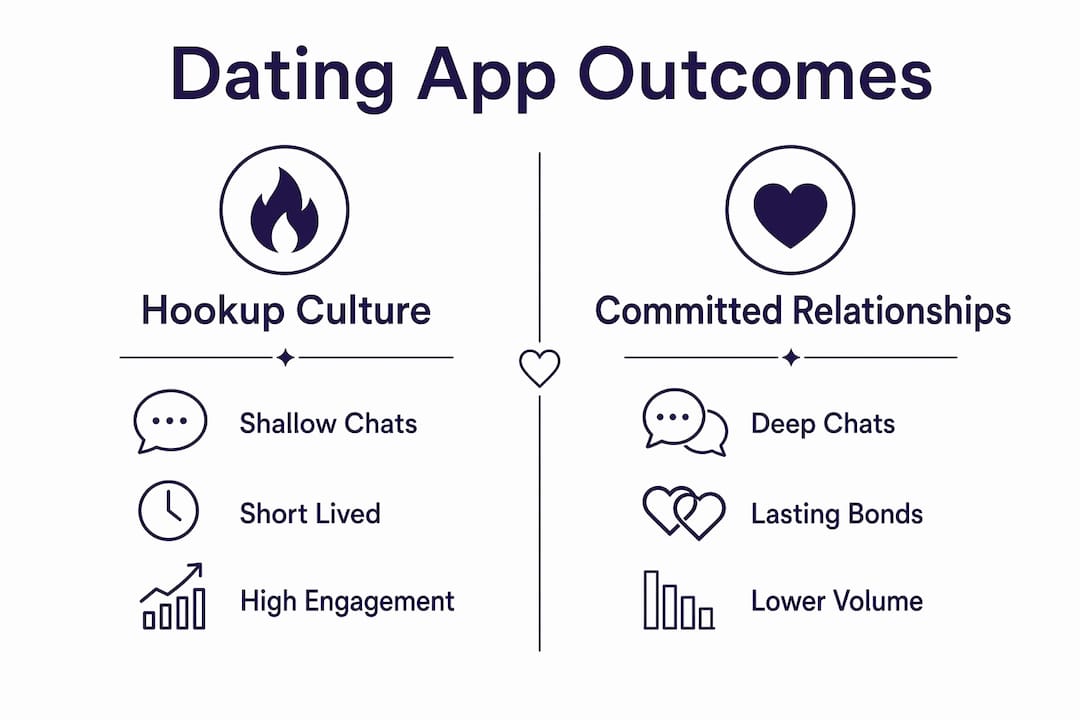
The transition from casual to committed is genuinely hard on these platforms. Users who want something real often find themselves performing casualness to avoid seeming "too intense," which creates a collective action problem. Everyone is pretending to want less than they actually do, because the environment punishes vulnerability. Exploring authentic online dating that builds real connection requires stepping outside that performance entirely.
How to navigate hookup culture and date more intentionally
You can use dating apps without being consumed by their design. It requires awareness and a few deliberate choices.
-
State your intentions early. Ethical communication and clarified intentions are the single most effective way to avoid emotional harm in casual dating contexts. Say what you are looking for in your profile and in early conversations. This filters out mismatched partners and signals confidence.
-
Limit your daily app time. Treating app use like a task with a defined end time reduces the dopamine-loop effect. Thirty minutes of focused, intentional engagement produces better results than three hours of mindless swiping.
-
Seek community-based alternatives. Swipe-based apps are one model. Community-driven dating platforms prioritize shared values and ongoing interaction over first impressions. The difference in emotional quality is significant.
-
Recognize what the algorithm is doing. When you feel the urge to keep searching after a good match, that is the paradox of choice at work. Name it. Then stop swiping and invest in the connection you already have.
-
Adjust your expectations of the platform, not of people. Most people on dating apps are not shallow. They are responding rationally to a shallow environment. When you change the environment, the behavior often changes too.
Pro Tip: Before opening any dating app, write down one specific quality you are looking for in a person that day. This small act of intention shifts your mindset from browsing to connecting.
Key takeaways
Hookup culture dominates dating apps because platform design, business incentives, and psychological dynamics all reinforce casual, low-investment behavior over genuine closeness.
| Point | Details |
|---|---|
| Design drives behavior | Swipe mechanics and retention algorithms reward searching, not connecting. |
| Emotional costs are real | Regret, burnout, and cynicism affect the majority of frequent app users. |
| Commitment is possible but hard | 27% of couples meet on apps, but the environment actively works against depth. |
| Intention changes outcomes | Stating what you want clearly reduces mismatched interactions and emotional harm. |
| Alternatives exist | Community-based platforms offer a different environment with different results. |
What I actually think about all of this
I have spent a long time watching people navigate dating apps, and the thing that strikes me most is not the hookups. It is the loneliness underneath them.
Most people who end up in casual encounters did not set out looking for something empty. They set out looking for closeness. The app gave them a match, the match felt like progress, and somewhere between the first message and the third date, the depth they were hoping for never arrived. That is not a character flaw. That is what happens when you look for warmth in a system designed to sell you the search.
The conventional wisdom says that hookup culture reflects what young people actually want. I think that is wrong. I think it reflects what the environment makes available and what feels safe when vulnerability has been punished enough times. The regret numbers are too high for this to be a story about preference. 78% of people feeling regret after casual sex is not a sign that people chose freely and got what they wanted. It is a sign that the gap between what people hoped for and what they got is enormous.
What I find genuinely hopeful is that awareness changes behavior. When people understand why the apps are built the way they are, they stop blaming themselves for feeling unsatisfied. They start making different choices. They look for different rooms to be in.
— Albert
A different kind of room exists
If you have ever felt like the apps were designed for everyone except you, that feeling is worth paying attention to. Sidefocusapp was built for men who want closeness, warmth, and presence over performance. It is a platform specifically designed for Sides, men who seek genuine intimacy without the pressure of traditional roles or the noise of swipe culture. There are no app store barriers, no gamified matching mechanics, and no incentive to keep you searching forever. Unlimited messaging and real community engagement mean you can actually get to know someone. If you are ready for something that feels like belonging, explore Sidefocusapp and see what a different kind of connection feels like.
FAQ
Why do dating apps favor casual relationships over serious ones?
Dating apps are built around retention-focused business models that profit from ongoing engagement rather than successful matches. This means the platform's financial incentives actively work against users finding lasting relationships quickly.
How common is hookup culture on dating apps?
72% of U.S. college freshmen participated in casual encounters as of 2026, reflecting how normalized hookup culture has become across major platforms.
Does hookup culture cause emotional harm?
Research shows that 78% of women and 72% of men reported regret after casual sex, and frequent app use is linked to emotional exhaustion, anxiety, and depression.
Can dating apps lead to committed relationships?
Yes. About 27% of couples now meet on dating apps. However, the platform environment makes depth harder to achieve, and intentional behavior is required to move beyond casual interactions.
What is the best way to avoid hookup culture on dating apps?
State your intentions clearly in your profile, limit daily app time to reduce the swipe-loop effect, and consider community-based platforms that prioritize authentic connection over first impressions.