
Web-based dating is the practice of searching for romantic or sexual partners through internet-connected platforms, using personal profiles and matchmaking technology to facilitate connections. The industry term is "online dating," and the two phrases describe the same practice. About 30% of Americans have used online dating platforms as of 2022. That number tells you this is no longer a niche activity. It is a mainstream way people find closeness, warmth, and real relationships. This article covers how these platforms work, what the benefits actually are, where the frustrations come from, and how to use them with intention rather than exhaustion.
What is web-based dating explained in plain terms?
Web-based dating is defined as using internet platforms to meet potential romantic partners through profile-based matching. You create a profile with personal details, photos, and preferences. The platform then uses an algorithm, a human matchmaker, or both to suggest people who may be compatible with you. This is the core mechanic behind every online dating service, from quick-swipe apps to in-depth compatibility platforms.
The industry distinguishes between two broad approaches. Quick-swipe apps prioritize speed and visual first impressions. Deeper matchmaking services collect more data, run personality assessments, and sometimes involve human review before suggesting a match. Both are forms of internet dating, but they serve different intentions and produce different experiences.
Understanding online dating also means recognizing what it is not. It is not a guaranteed shortcut to connection. It is a tool. How you use it shapes what you get from it.
How does online dating work behind the scenes?
Web-based dating platforms work by collecting profile data and running it through matching logic to surface compatible people. The data collected typically includes age, location, relationship goals, interests, lifestyle habits, and sometimes personality test results. Algorithms weigh these inputs and generate ranked suggestions.
Here is what most platforms collect and use:
- Basic demographics: Age, location, gender, and orientation
- Lifestyle data: Exercise habits, diet, drinking, smoking, and religion
- Relationship intent: Casual, long-term, or open to either
- Personality indicators: Responses to prompts or standardized questionnaires
- Behavioral signals: Who you swipe on, message, or ignore
Platforms combining algorithms with human matchmaker review often achieve better compatibility results than algorithm-only apps. The human layer catches nuance that data points miss. A person might list "hiking" as an interest but actually want a partner who prefers quiet evenings at home. A human matchmaker picks that up. An algorithm usually does not.
Pro Tip: Fill out every section of your profile honestly, including the less glamorous details. Platforms weight completeness, and accurate data produces better matches than a curated but incomplete picture.
What are the real benefits of web dating?
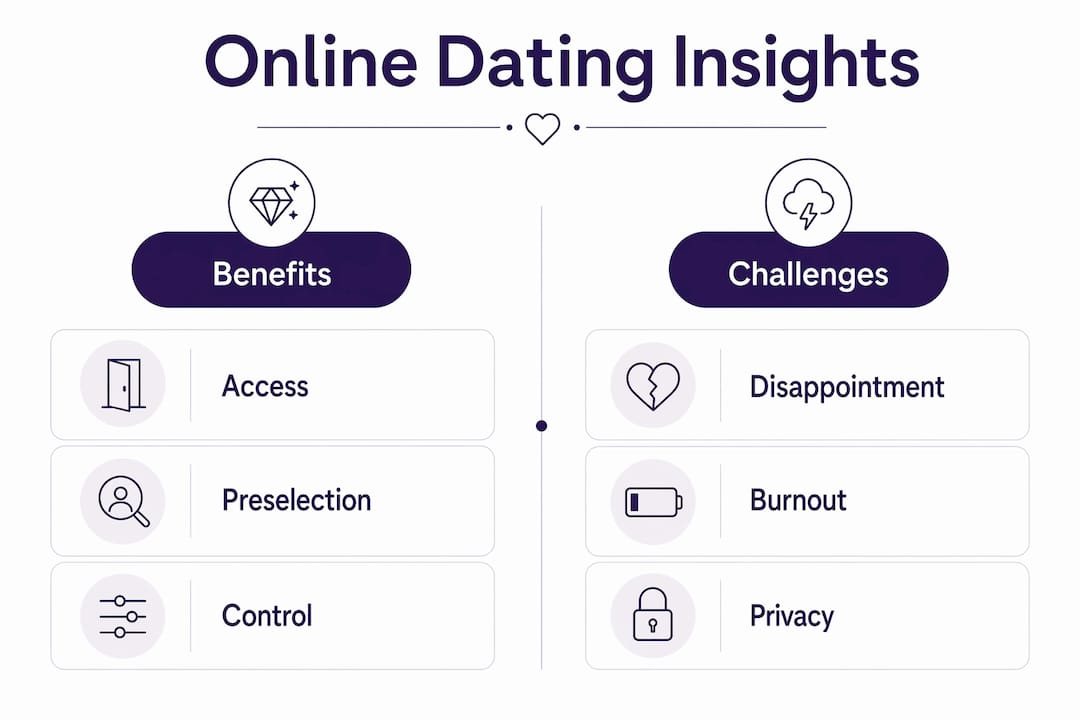
The clearest benefit of web dating is access. Online dating expands your pool of potential partners far beyond your immediate social circle, neighborhood, or workplace. That reach is genuinely hard to replicate offline. You can connect with people you would never cross paths with in daily life.
The second benefit is preselection. Filters let you screen for compatibility before you invest time in a conversation. You can set preferences for relationship goals, values, and lifestyle before anyone sends a single message. This saves real time and emotional energy.
A third benefit surprises most people. Research published in 2026 found that users who accessed larger pools of profiles, such as 31 options versus 6, reported higher intention to commit. More choices helped people identify a partner they felt was truly compatible. That directly contradicts the popular "choice overload" myth.
Here is a summary of the core advantages:
- Wider reach: Access to people outside your existing social network
- Compatibility filters: Screen by values, goals, and lifestyle before messaging
- Time efficiency: Preselection reduces wasted dates with poor-fit matches
- Control over pace: You decide when and how to engage
- Community belonging: Niche platforms connect people with shared identities and values
The control factor matters more than people acknowledge. You choose who sees your profile, who you respond to, and when you move a conversation offline. That level of agency is simply not available in traditional social settings.
What are the common challenges in online dating?
The experience of online dating is genuinely mixed. 42% of users report positive experiences while 46% report negative ones. That near-even split means the platform itself is only part of the equation. Mindset and habits drive the rest.
The biggest misconception is treating online dating like a market. You browse, you select, you transact. Treating dating as a purely transactional process ignores the organic, in-person factors that genuine connection depends on. Algorithms can surface a compatible stranger. They cannot manufacture chemistry, timing, or emotional safety.
The most common frustrations people report follow a recognizable pattern:
- Superficial first impressions: Photos and short bios rarely capture personality depth
- Ghosting and low-effort communication: Many conversations never move past opening lines
- App fatigue: Endless swiping without meaningful progress drains motivation
- Misrepresentation: Some profiles present an idealized rather than honest version of the person
- Mismatch between stated and actual intentions: Someone lists "long-term relationship" but behaves like they want something casual
The emotional weight of repeated disappointment is real. Burnout is common among people who use dating apps without boundaries or intention. The features of better dating platforms address some of these issues structurally, but no platform eliminates them entirely.
Pro Tip: If you notice yourself feeling worse after using a dating app rather than hopeful, that is a signal to change your habits, not necessarily your profile. Emotional agency matters more than profile optimization.
Practical tips for getting more from web-based dating
The most effective approach to internet dating is intentional, not intensive. The Greater Good Science Center recommends limiting app use to around 15 minutes per day. That boundary preserves emotional energy and keeps the experience from becoming a second job.
Authentic presence is the other non-negotiable. Successful modern dating requires letting go of rigid scripts and using digital tools to cultivate genuine presence rather than pure efficiency. Write messages that reflect who you actually are. Ask questions you genuinely want answered. Treat the conversation as a real interaction, not a screening interview.
Practical habits that improve your experience:
- Set a daily time limit: 15 minutes of focused engagement beats 2 hours of passive scrolling
- Move conversations offline sooner: A short phone call or coffee date reveals more than 50 messages
- Use filters with purpose: Narrow by values and goals, not just aesthetics
- Take breaks without guilt: Stepping away for a week resets your perspective and patience
- Prioritize genuine conversations over volume: One real exchange is worth more than ten surface-level matches
Balancing online and offline interaction is not optional. It is the whole point. Digital tools open the door. Presence and honesty are what build something real on the other side of it.
Comparing types of web-based dating platforms
Not all online dating services work the same way. The differences matter when you are choosing where to invest your time and energy.
| Platform type | Matching method | Best suited for | Key feature |
|---|---|---|---|
| Quick-swipe apps | Algorithm, photo-first | Casual or exploratory dating | Fast, high-volume browsing |
| Compatibility platforms | Algorithm plus personality data | Long-term relationship seekers | Deeper profile matching |
| Human-assisted services | Human matchmaker plus software | Serious commitment seekers | Personalized, curated introductions |
| Community-based platforms | Shared identity or values | Niche audiences seeking belonging | Focused membership, lower noise |
| Introduction sites | Human-curated, no app required | Privacy-conscious users | No app store install needed |
Most matchmaking services emphasize compatibility and long-term commitment rather than casual encounters. They use personality tests, lifestyle questionnaires, and sometimes direct human review. That investment in depth produces a different experience than a quick-swipe environment. The right platform type depends entirely on what you are actually looking for. Choosing a casual swipe app when you want a long-term relationship is one of the most common and avoidable mistakes in online dating.
Key takeaways
Web-based dating works best when you treat it as a compatibility tool, not a market, and pair intentional platform use with genuine offline engagement.
| Point | Details |
|---|---|
| Definition is clear | Web-based dating means finding partners via internet profiles and matchmaking technology. |
| More choices help | Larger profile pools increase commitment intention, contradicting the choice overload myth. |
| Mindset drives results | Mixed user experiences reflect habits and expectations more than platform quality alone. |
| Limit daily use | Capping app time at around 15 minutes preserves emotional energy and focus. |
| Platform type matters | Match your platform choice to your actual relationship goal for better outcomes. |
What I have learned watching online dating evolve
The shift I have watched over the past several years is real. Online dating has moved from a casual experiment to a mainstream path toward intentional, long-term relationships. That is a meaningful change. But the culture around it has not fully caught up.
Too many people still approach it like a catalog. Swipe, select, discard. That mindset produces exactly the burnout and disappointment they are trying to avoid. The people I have seen build real connections online share one trait: they show up as themselves, without performance.
The technology is genuinely useful. Filters, compatibility data, and expanded reach are real advantages. But they are inputs, not outcomes. You still have to be present. You still have to be honest. And you have to be willing to avoid superficial matches even when the algorithm keeps serving them up.
The most underrated web-based dating tip is this: treat every conversation like it matters, because to the person on the other side, it does.
— Albert
Sidefocusapp and the case for connection over performance
Some people are not looking for a hookup or a high-volume swipe experience. They want warmth. Closeness. A place where they actually belong.

Sidefocusapp is built for exactly that. It is a relationship platform designed for men who identify as Sides, those who seek genuine intimacy and emotional connection without the pressure of traditional roles or performative dating. There is no app store install required. Unlimited messaging and community engagement come built in. If you have ever felt like mainstream platforms were not built with you in mind, this room was made for you. Visit Sidefocusapp and see what intentional, community-based connection actually feels like.
FAQ
What is web-based dating?
Web-based dating is the practice of searching for romantic or sexual partners through internet platforms using personal profiles and matchmaking technology. It is also called online dating or internet dating.
How does online dating work?
Online dating platforms collect profile data including interests, lifestyle, and relationship goals, then use algorithms or human matchmakers to suggest compatible partners.
Is online dating safe?
Online dating carries real risks including misrepresentation and privacy concerns, but using reputable platforms, keeping personal details private early on, and meeting in public places reduces those risks significantly.
Does having more matches improve commitment?
Yes. Research shows that users who viewed larger pools of profiles reported higher intention to commit, because broader options help identify a truly compatible match.
What is the difference between a swipe app and a matchmaking service?
Swipe apps prioritize speed and photo-based selection, while matchmaking services use personality data and sometimes human review to produce deeper compatibility matches suited to long-term relationships.