
Mainstream dating platforms are designed to keep you swiping, not to help you find someone real. Apps like Tinder, Hinge, and OkCupid have built business models that reward engagement over connection, and the result is a generation of users who feel more burned out, more insecure, and more alone than before they downloaded anything. Research now confirms what millions already feel in their bones: the problems with online dating run deeper than bad matches or awkward first messages. The structural flaws are baked in, and understanding them is the first step toward finding something better.
What is wrong with mainstream dating platforms: the business model problem
The core issue is simple. Dating apps earn money when you stay on them, not when you leave happy. That single misalignment explains most of the frustration you have probably felt. Revenue-driven design creates features built to prolong dissatisfaction rather than lead to successful matches, because a user who finds their person and deletes the app is a user who stops paying.
Here is how that plays out in practice:
- Subscription tiers and paid boosts reward the platform every time you feel invisible without them. You pay to be seen, then pay again when the attention fades.
- Gamified swiping turns human beings into a card deck. The design borrows from slot machine psychology, delivering unpredictable rewards just often enough to keep you pulling the lever.
- Ghosting as a structural norm. A TIME 2024 study found that 78% of users felt emotionally exhausted by app use, and 84% had experienced ghosting. That is not a coincidence. Platforms offer no friction against disappearing, because friction would reduce activity metrics.
- Endless options as a trap. More choices create more psychological uncertainty, not more satisfaction. The result is what researchers call "industrialized uncertainty," a loop of swiping and disappointment that reinforces anxious and avoidant behavior rather than secure connection.
The BBC analyzed 26,000 people over 17 years and found significantly worse psychological health among dating app users compared to non-users, with the sharpest effects among those already struggling. That is not a side effect. That is the product working as intended.
Pro Tip: Set a hard weekly time limit on any dating app you use. Thirty minutes a day is enough to engage meaningfully. Beyond that, you are feeding the algorithm, not your love life.
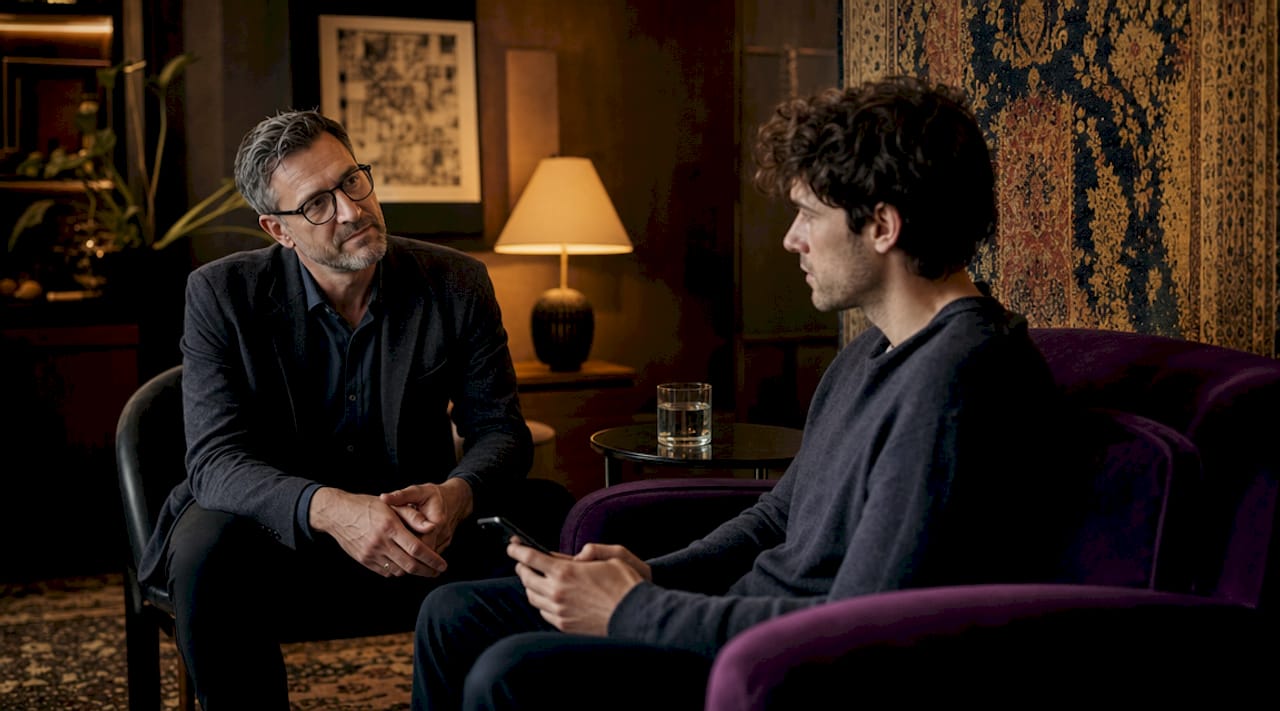
How app design damages your mental health over time
Dating app burnout is a recognized pattern of emotional exhaustion, cynicism, and a growing sense that nothing will ever work. It mirrors workplace burnout in its structure, and it is caused by app design, not personal failing. That distinction matters enormously.
The psychological effects stack up in specific ways:
- Attachment insecurity. Clinical psychiatrist Amir Levine, featured in TIME, explains that hot-cold communication patterns on apps reinforce both anxious and avoidant attachment styles. People who were securely attached before downloading an app often find themselves checking their phones compulsively or pulling away from promising connections out of self-protection.
- Body image pressure. Research covered by Phys.org shows that dating app design contributes to sexualized self-presentation and body dissatisfaction, with gay-focused apps showing stronger effects but mainstream platforms still doing measurable harm to men's self-image.
- Loneliness that compounds. Apps promise connection but deliver comparison. You are not just looking for a match. You are measuring yourself against an invisible standard set by who gets likes and who does not.
- Depression and anxiety links. The BBC meta-analysis tied regular app use to elevated rates of depression, anxiety, and loneliness, particularly among users who were already in a vulnerable place emotionally.
"Apps create an insecure environment that stifles stable, secure relationships." — Amir Levine, clinical psychiatrist, as quoted in TIME
The dating app fatigue you feel after a few months of swiping is not weakness. It is a rational response to a system that was never built to serve you.
Privacy and trust issues on popular dating sites
Beyond burnout, there is a quieter betrayal happening in the background. OkCupid and Match Group were found to have illegally shared nearly 3 million user photos and location data with an unrelated third party, in direct violation of their own privacy promises. The FTC settlement that followed prohibits these companies from misrepresenting their data practices going forward. But the damage to user trust is already done.
| Privacy issue | What it means for you |
|---|---|
| Unauthorized photo sharing | Your profile images may have been distributed without your knowledge or consent |
| Location data exposure | Your physical whereabouts were shared with parties you never agreed to |
| FTC enforcement action | Regulatory action confirms the breach was real, not speculative |
| Gap between policy and practice | Privacy promises on these platforms are not always honored in practice |
The FTC settlement is significant because it confirms what many users suspected: the gap between what these platforms promise and what they actually do with your data is real. Privacy misrepresentation is not a minor technical issue. It is a fundamental breach of the trust that makes any relationship platform viable.
Comparing mainstream platforms by their core drawbacks
Not every app fails in the same way. Understanding the specific weaknesses of each platform helps you make clearer choices.
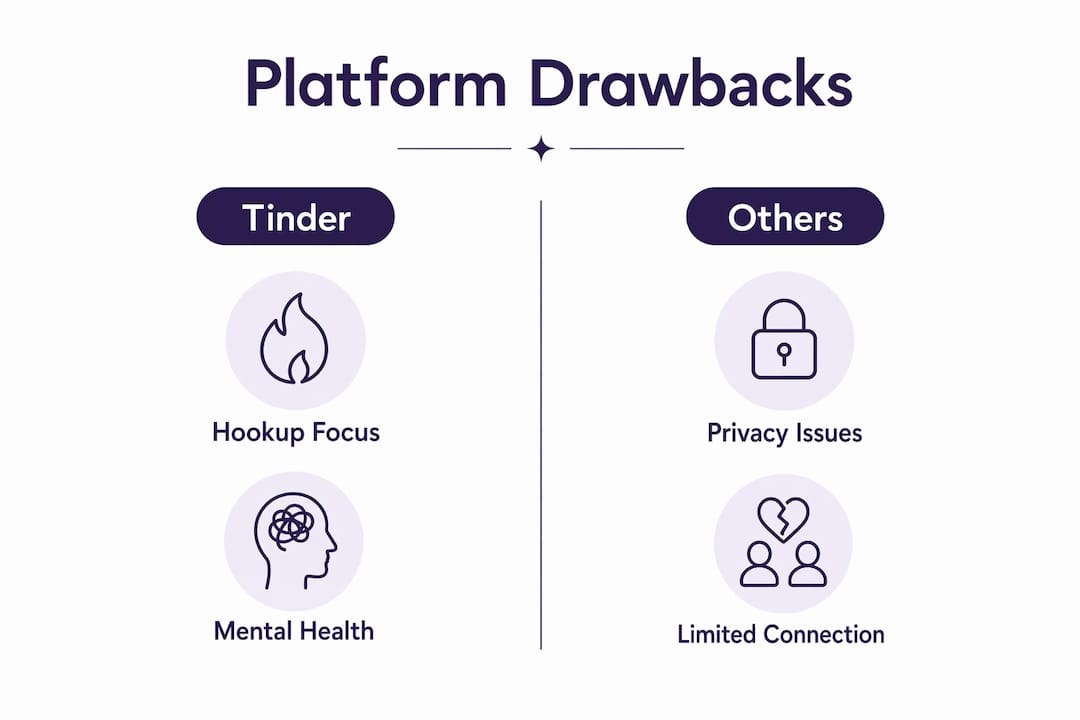
| Platform | Primary drawback | Secondary concern |
|---|---|---|
| Tinder | Hookup focus with no long-term gains | Higher sexual assault and STD rates in areas of heavy use |
| Hinge | Designed to be deleted, but still gamified | Subscription features create pay-to-play dynamics |
| OkCupid | Privacy violations confirmed by FTC | Algorithm transparency is limited |
| Bumble | Harassment reduction by design, but still superficial | Match expiry creates artificial urgency |
| POF (Plenty of Fish) | High volume of inactive or fake profiles | Weak moderation and safety features |
An AEA study on Tinder found that the app increased sexual activity among college students without improving long-term relationship formation or quality. That gap between short-term behavior change and long-term relational health is the clearest evidence of a fundamental disconnect in how these platforms are built. The hookup culture dominance on most mainstream apps is not accidental. It is the natural output of designs that reward volume over depth.
Pro Tip: Before joining any platform, search its name alongside "FTC" or "data breach" to check its privacy track record. What you find will tell you more than any marketing copy.
Practical alternatives for finding real connection
The good news is that the mainstream dating platforms drawbacks are well-documented enough that better options are emerging. You do not have to keep feeding a system that drains you.
- Community-based dating. Platforms and spaces built around shared identity or values create natural context for connection. When you already have something in common with someone before the first message, the conversation starts from warmth rather than performance. Community-based alternatives are growing precisely because they solve the context problem that swiping apps ignore.
- App-free or low-tech options. Interest groups, hobby communities, and in-person events are seeing a genuine resurgence. App-free dating removes the gamification layer entirely and puts you back in situations where presence matters more than profile photos.
- Platforms built around emotional connection. Some newer platforms explicitly prioritize closeness and care over physical presentation. They offer unlimited messaging without paywalls, no swipe mechanics, and communities organized around genuine intimacy rather than volume.
- Intentional usage habits. If you stay on mainstream apps, set clear boundaries. Decide in advance what you are looking for, limit your daily time, and treat ghosting as information about the platform rather than about your worth.
- Therapy and self-awareness. Understanding your own attachment style before you date digitally is one of the most protective things you can do. Knowing whether you lean anxious or avoidant helps you recognize when an app is amplifying those patterns rather than helping you grow past them.
The features of better platforms share a common thread: they reduce friction toward real conversation and increase friction against shallow, disposable interaction. That inversion of the mainstream model is exactly what makes them feel different.
Key takeaways
Mainstream dating platforms fail users because their revenue models reward engagement over connection, creating emotional burnout, attachment insecurity, and privacy risks that no amount of better profile photos can fix.
| Point | Details |
|---|---|
| Business model misalignment | Apps profit from keeping you active, not from helping you find a lasting connection. |
| Emotional burnout is structural | Exhaustion, cynicism, and anxiety are caused by app design, not personal failure. |
| Privacy breaches are documented | OkCupid and Match Group shared user data without consent, confirmed by FTC action. |
| Platform differences matter | Tinder, Hinge, Bumble, and POF each fail in distinct ways worth understanding before you sign up. |
| Better options exist | Community-based and care-focused platforms invert the mainstream model and prioritize closeness over volume. |
Why the system keeps failing, and what that means for you
I have spent years watching people cycle through the same apps, the same disappointments, and the same quiet erosion of hope. The pattern is not random. It is the predictable output of a system that was never designed to make you happy. It was designed to make you come back.
What strikes me most is how rarely people blame the platform. They blame themselves. They think they are not attractive enough, not interesting enough, not lucky enough. But the research is clear: the psychological distress linked to these apps is tied to how the apps work, not to who you are. That realization should feel like relief. It does for most people, once it lands.
The mental health dimension of this conversation is still underappreciated. We talk about bad dates and ghosting as annoyances. We do not talk enough about the cumulative weight of months or years inside a system designed to keep you slightly dissatisfied. That weight is real, and it deserves to be named.
My honest advice: approach digital dating with the same intentionality you would bring to any other significant investment of your emotional energy. Know what you are looking for. Know which platforms align with that. And be willing to walk away from any space that consistently leaves you feeling worse about yourself. There are rooms being built right now where the door is small on purpose, where the people inside are looking for warmth and presence, not performance. Those rooms are worth finding.
— Albert
A different kind of room: discover Sidefocusapp
If you recognize yourself in any of this, you are not alone. And you do not have to keep looking for closeness in places that were never built to offer it.
Sidefocusapp was built for men who want something that mainstream apps were never designed to give: genuine intimacy, warmth, and the kind of presence that actually feels like belonging. No swiping. No paywalls blocking conversation. No performance required. Just a community of men who understand what it means to want closeness without the noise. If you are ready to step into a space where connection is the whole point, explore Sidefocusapp and see what it feels like when the design actually works for you.
FAQ
What is the main reason dating apps fail users?
Dating apps are built to maximize engagement and revenue, not to help users find lasting connections. This misalignment produces features like gamified swiping, paid visibility boosts, and no friction against ghosting, all of which prioritize retention over relationship outcomes.
How do dating apps affect mental health?
A BBC meta-analysis of 26,000 people over 17 years found significantly worse psychological health among dating app users than non-users, with links to depression, anxiety, and loneliness. The effects are strongest among users who were already emotionally vulnerable before they started.
Which mainstream dating platforms have had privacy violations?
OkCupid and Match Group were found by the FTC to have illegally shared nearly 3 million user photos and location data with an unrelated third party. The resulting settlement prohibits these companies from misrepresenting their data collection and sharing practices going forward.
Does Tinder help people find long-term relationships?
An AEA study found that Tinder increased sexual activity among college students but had no meaningful effect on long-term relationship formation or quality. It also correlated with higher rates of sexual assault and STDs in areas of heavy use.
What are better alternatives to mainstream dating apps?
Community-based platforms, care-focused apps like Sidefocusapp, and app-free social options all offer more context for genuine connection. The key difference is that these alternatives reduce gamification and prioritize conversation and closeness over volume and visual presentation.