Dating app fatigue is the psychological and emotional exhaustion caused by the design, volume, and low-yield nature of mainstream dating app experiences. This isn't a personal weakness or a sign you're doing something wrong. Research published in Current Psychology in 2026 confirms it as a measurable phenomenon with identifiable causes and real mental health consequences. If you've felt drained, cynical, or numb after hours of swiping, you're not alone. And you're not imagining it.
Why dating app fatigue is real, according to research
The exhaustion you feel isn't random. A 2026 study using the Stressor–Strain–Outcome framework identified four specific stressors that drive dating app fatigue: communication overload, information overload, information irrelevance, and technological vulnerability. Each one chips away at your mental energy in a distinct way.
Here's what each stressor actually means in practice:
- Communication overload: You're managing too many conversations at once, most of which go nowhere. The cognitive load of tracking names, details, and emotional tone across dozens of threads is genuinely taxing.
- Information overload: Endless profiles create a paradox of choice. The more options you see, the harder it becomes to feel confident about any single one.
- Information irrelevance: Most matches simply aren't compatible. The gap between the volume of profiles and the number of meaningful connections creates a persistent sense of wasted effort.
- Technological vulnerability: App glitches, algorithm opacity, and the feeling that the platform isn't working for you all contribute to a low-grade sense of helplessness.
Beyond these stressors, gamification drives exhaustion through intermittent reinforcement. The occasional match or message triggers a dopamine spike, much like a slot machine. That neurological loop keeps you swiping even when you're emotionally depleted. The system is designed to hold your attention, not to get you off the app.
Pro Tip: If you notice you're swiping out of habit rather than genuine interest, that's a signal your brain is in the dopamine loop. Closing the app and doing something tactile, like making coffee or going for a short walk, can interrupt the cycle.
How does dating app burnout affect mental health?
Dating app burnout maps directly onto established psychological burnout constructs: emotional exhaustion, cynicism, and inefficacy. These aren't vague feelings. They're recognized patterns with measurable effects.
A meta-analysis of roughly 26,000 participants found that heavier dating app use correlates with higher rates of depression, anxiety, and loneliness compared to non-users. That correlation holds even when controlling for pre-existing conditions. The apps themselves appear to worsen psychological health over time, not just reflect it.
"Those struggling in offline dating are more vulnerable to faster exhaustion on apps." — BBC Future, 2026
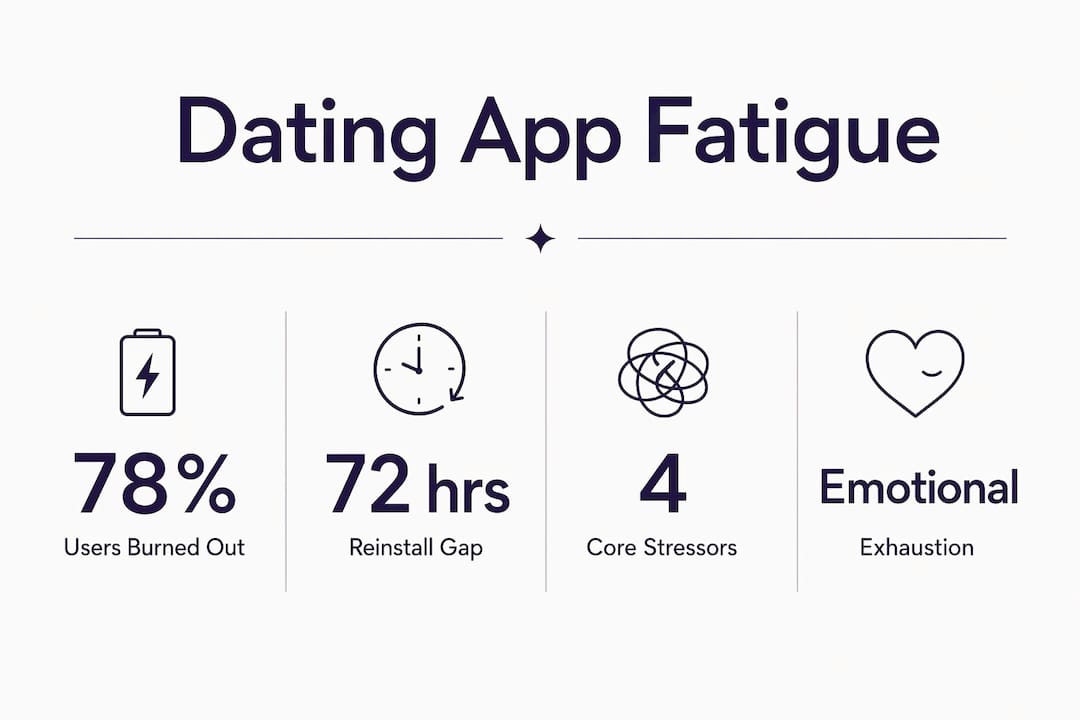
A 2025 Forbes Health survey found that 78% of dating app users report feeling burned out from endless swiping without real results. That's nearly four in five users. It means burnout is the norm, not the exception.
One of the most telling behavioral symptoms is the delete-reinstall cycle. Users report deleting and reinstalling apps hundreds of times, briefly restoring a sense of agency before the fatigue returns. It's a habit loop, not a solution.
Trust also plays a role. The 2026 Current Psychology study found that higher generalized trust acts as a buffer, meaning users who trust people more broadly tend to tolerate fatigue longer before quitting. Lower-trust users burn out faster and disengage sooner.
| Burnout symptom | What it looks like on dating apps |
|---|---|
| Emotional exhaustion | Feeling drained after opening the app, even briefly |
| Cynicism | Assuming matches won't lead anywhere before messaging |
| Inefficacy | Believing your effort has no real impact on outcomes |
| Behavioral withdrawal | Deleting apps repeatedly, reducing message frequency |
Why do dating apps struggle to fix the problem?
The honest answer is that most apps aren't designed to solve fatigue. They're designed to maximize engagement. Apps' business models incentivize prolonged time on platform, not successful matches that lead users to leave. A user who finds a lasting relationship and deletes the app is, from a revenue standpoint, a lost customer.
This creates a structural conflict. The features that keep you scrolling, like infinite swipe queues, push notifications, and "likes you" teasers locked behind paywalls, are the same features that accelerate exhaustion. Swipe fatigue isn't a bug. It's a byproduct of a system optimized for retention.
| App design feature | Stated purpose | Actual effect on users |
|---|---|---|
| Infinite swipe queue | More choice for users | Cognitive overload, decision fatigue |
| Intermittent match notifications | Keep users engaged | Dopamine dependency, compulsive checking |
| Paywall-gated features | Monetization | Frustration, sense of unfairness |
| Algorithm opacity | Personalized matching | Distrust, feeling of helplessness |
Some researchers describe this as the "McDonaldisation" of dating: fast, standardized, and optimized for throughput rather than quality. Platforms like Bumble, Hinge, and Tinder are beginning to respond, with AI-driven matchmaking and in-person events emerging as industry experiments. But these are early moves, and the core business model hasn't changed yet.
What are the symptoms of dating fatigue, and how do you recover?
Recognizing the symptoms of dating fatigue early gives you the chance to act before the exhaustion becomes chronic. The signs are often subtle at first.
- Feeling overwhelmed before you even open the app. Dread before engagement is a clear signal your nervous system is already taxed.
- Emotional numbness toward matches. When a new match produces no feeling at all, cynicism has set in.
- Loss of motivation to reply. Conversations feel like obligations rather than opportunities.
- Comparing yourself negatively to your profile. Feeling like you're performing rather than connecting is a sign the platform is working against you.
- Physical fatigue after app use. Scrolling for 20 minutes and feeling tired is a real physiological response to cognitive overload.
Liesel Sharabi and other mental health professionals recommend mindful scheduling of app usage as a first step. Set a specific window for app use, say 20 minutes in the evening, and close it when the time is up. Track your mood before and after each session. If the app consistently leaves you feeling worse, that data matters.
Maintaining social connections outside the app is equally important. Offline friendships, community involvement, and in-person activities counteract the isolation that heavy app use can deepen. Taking a full break from apps is a legitimate form of self-care, not a failure.
Pro Tip: Before reinstalling an app you've deleted, wait 72 hours. If the urge passes, you probably didn't need it. If you still want to try again, go in with a time limit already set.
What are the most promising alternatives to mainstream apps?
The shift away from swipe-heavy platforms is gaining real momentum. Several directions are worth knowing about.
- Community-based dating: Platforms built around shared identity or values reduce information irrelevance by design. When everyone in the room has something meaningful in common, the signal-to-noise ratio improves dramatically. You can explore authentic online dating approaches that prioritize real connection over volume.
- Human matchmaker services: Higher-touch and slower by design, these services trade convenience for quality. The friction is the point. It filters out low-commitment interactions before they drain your energy.
- AI-assisted matchmaking: Bumble and Hinge are experimenting with AI that selects matches on your behalf rather than presenting an infinite queue. The goal is fewer, better options. Results are still early, but the direction is meaningful.
- Offline events and social spaces: Structured social events, hobby groups, and community gatherings restore the human friction that apps have engineered away. Chance encounters and shared experiences create context that a profile photo never can.
- Niche platforms focused on closeness: Some newer spaces are built specifically for people who want warmth and presence over performance. A community-based dating alternative built around genuine intimacy looks and feels very different from a mainstream swipe app.
The common thread across all these alternatives is intentionality. Less volume. More meaning. That shift alone reduces the cognitive and emotional load that causes fatigue in the first place.
Key takeaways
Dating app fatigue is a research-confirmed psychological condition caused by app design, cognitive overload, and emotional exhaustion, not by personal failure.
| Point | Details |
|---|---|
| Four core stressors | Communication overload, information overload, irrelevance, and tech vulnerability drive fatigue. |
| Burnout is widespread | 78% of users report burnout from swiping, making it the norm rather than the exception. |
| Apps aren't designed to fix it | Business models reward engagement over successful matches, perpetuating the fatigue cycle. |
| Early symptoms are recognizable | Dread, numbness, and compulsive checking are signs to act before exhaustion deepens. |
| Alternatives exist | Community-based, AI-assisted, and offline approaches reduce overload and restore genuine connection. |
What I've learned from watching people burn out on apps
I've spent a lot of time thinking about why so many people feel worse after using tools that are supposed to help them connect. The pattern is consistent. People arrive with genuine hope. They leave feeling like something is wrong with them.
Nothing is wrong with them. The system is extracting emotional labor without delivering proportional value. That's not a personal failing. It's a design outcome.
What strikes me most is how the delete-reinstall cycle mirrors other compulsive behaviors. The brief relief of deleting an app, followed by the slow creep back, tells you everything about how these platforms are built. They're not rooms you visit. They're rooms that follow you home.
The most honest thing I can say is this: if the app is making you feel smaller, less worthy, or more alone, it is not working for you. No amount of optimization, better photos, or sharper bios will fix a system that isn't aligned with your actual needs. The answer isn't to try harder on the same platform. It's to find a space where closeness is the whole point, not a side effect.
— Albert
A different kind of space for connection
If mainstream apps have left you feeling drained and invisible, you deserve something built differently from the ground up.
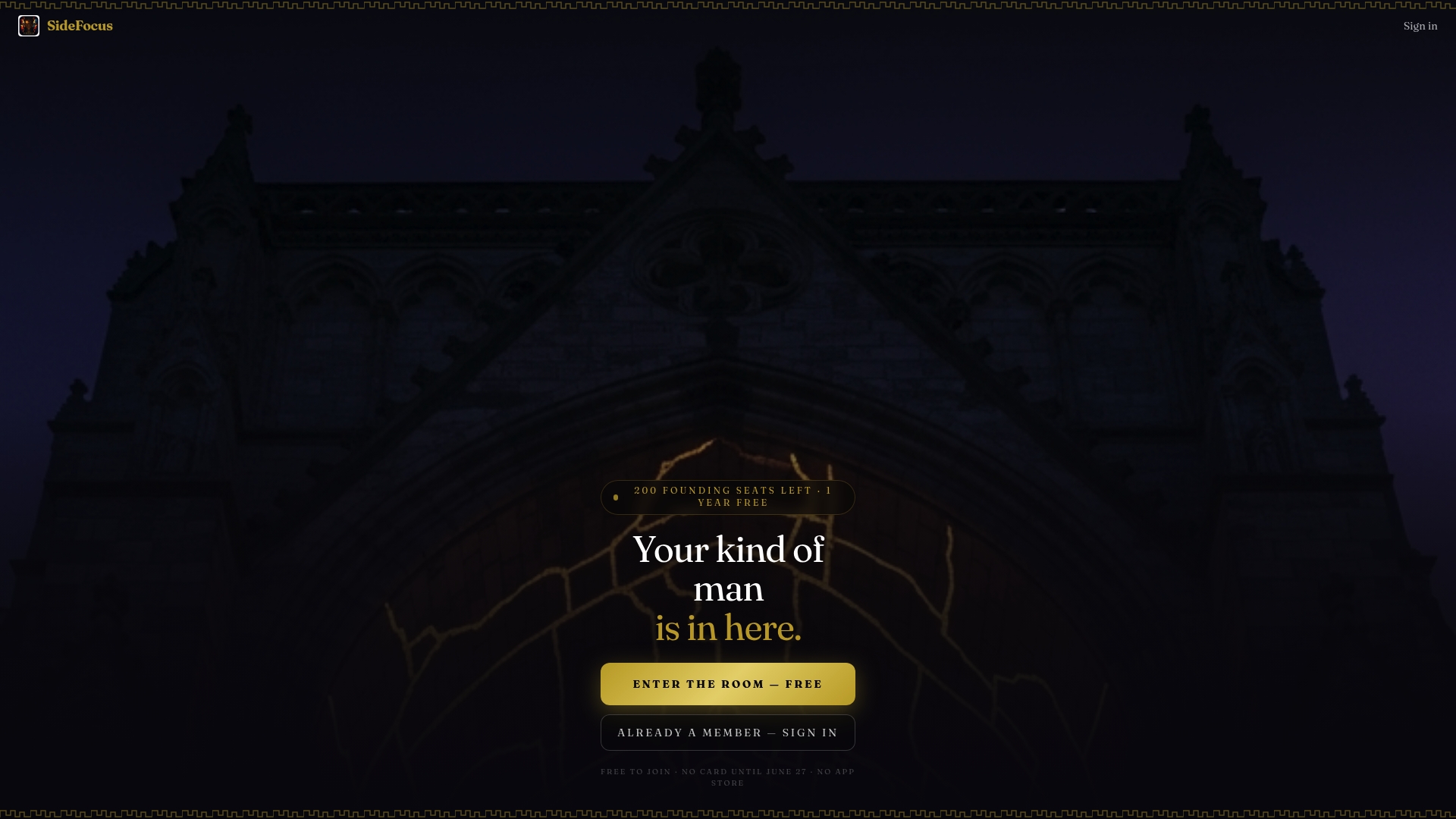
Sidefocusapp was created for men who want genuine intimacy, warmth, and presence, without the performance pressure or the endless swipe queue. There's no app store installation required. No gamified matching system designed to keep you hooked. Just a space where closeness is the point, and the people in the room are there for the same reason you are. If you're ready to step away from the fatigue cycle, explore Sidefocusapp and see what connection feels like when it's built around care rather than clicks.
FAQ
What is dating app fatigue exactly?
Dating app fatigue is the psychological and emotional exhaustion caused by the cognitive demands, emotional labor, and low-yield interactions of mainstream dating apps. A 2026 Current Psychology study identifies it as a measurable condition with specific stressors including communication overload and information irrelevance.
How common is dating app burnout?
A 2025 Forbes Health survey found that 78% of dating app users report feeling burned out from endless swiping without meaningful results. Burnout is the majority experience, not an outlier.
Can dating apps cause depression or anxiety?
A meta-analysis of roughly 26,000 participants found that heavier dating app use correlates with higher rates of depression, anxiety, and loneliness compared to non-users. The relationship appears to go beyond pre-existing conditions.
How do I know if I'm overwhelmed by dating apps?
Key symptoms include dreading opening the app, emotional numbness toward new matches, compulsive checking followed by disappointment, and feeling physically tired after short sessions. If the app consistently leaves you feeling worse, that pattern is the answer.
What actually helps with dating app exhaustion?
Mental health professionals recommend setting strict time limits for app use, tracking your mood before and after sessions, maintaining offline social connections, and taking full breaks when needed. Shifting to community-based or lower-volume platforms also reduces the structural stressors that cause fatigue.