
Meaningful connection is defined by emotional intimacy, mutual care, and the feeling of being genuinely known. Not by match counts. If you have spent time on mainstream swipe apps and walked away feeling emptier than when you started, you are not alone, and you are not the problem. Research from a 44,435-user study shows that 80.6% of dating app users say they want love, yet many interactions serve boredom or self-esteem needs instead. To find meaningful connections beyond Tinder, you need both better platforms and a smarter approach to how you show up on them.
Why mainstream swipe apps fall short for meaningful connection
The core problem with swipe culture is not the technology. It is the motive mismatch baked into the design.
Tinder scores highest on mood regulation motives, with roughly 50% of swipes driven by boredom rather than genuine romantic intent. That means half the people you match with are not really looking for what you are. The result is a stream of conversations that go nowhere, leaving you questioning yourself instead of the system.
Here is what that friction actually produces:
- Emotional exhaustion. Hours of swiping with little return creates dating app burnout, a real psychological state marked by fatigue and growing cynicism.
- Communication overload. A peer-reviewed study on messaging overload links too many concurrent chats to exhaustion and the intention to quit apps entirely.
- Performative behavior. When profiles are quick to build and cheap to swipe, people present curated versions of themselves rather than honest ones.
- Shallow contact. Loneliness research from a 25,646-person EU survey shows that social contact only reduces loneliness when it crosses a personal quality threshold. Volume alone does not help.
The apps are optimized for engagement, not for your emotional wellbeing. That distinction matters.
Pro Tip: If you find yourself swiping at midnight out of restlessness rather than genuine hope, that is a signal to close the app. Mood-driven swiping rarely produces the depth you are actually after.
Which alternative platforms support deeper, more authentic connections?
Not every dating platform is built the same way. Some are genuinely designed to reduce performative behavior and encourage real intimacy. Here is how the major options compare.
| Platform | Relationship focus | Key differentiator |
|---|---|---|
| Hinge | 85% serious love seekers | Prompt-based profiles encourage vulnerability |
| Bumble | 82% serious love seekers | Women message first, reducing unsolicited contact |
| OkCupid | High compatibility focus | Deep questionnaires surface value alignment |
| Sonder | Community-first | Tedious sign-up and recurring IRL events |
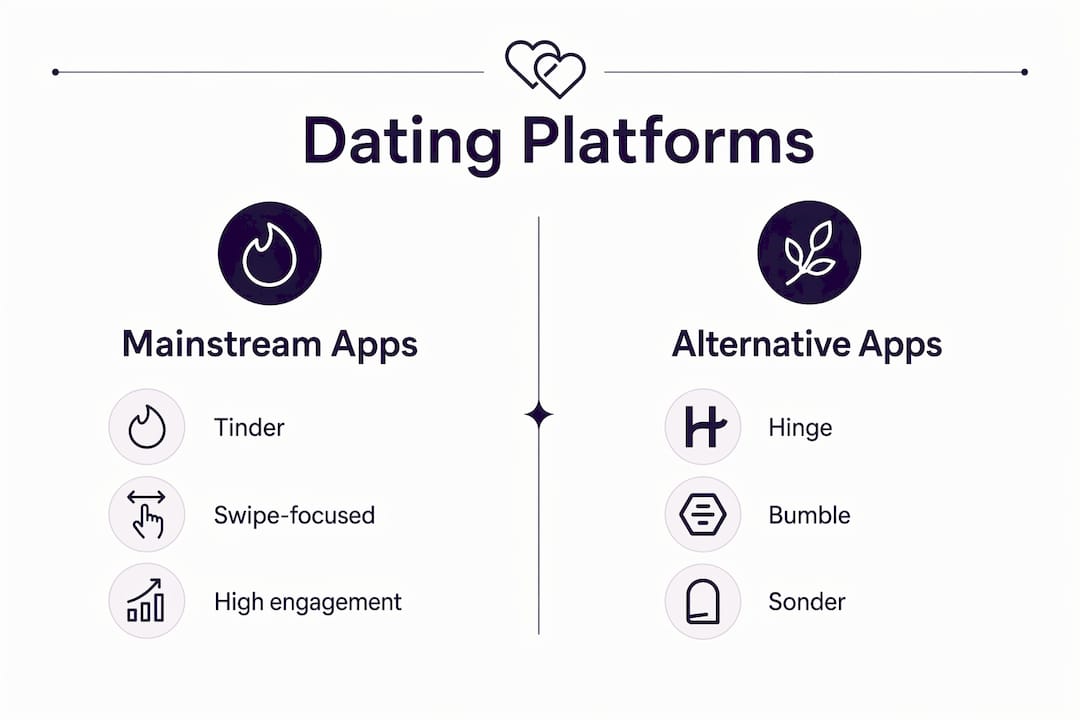
Hinge, Bumble, and OkCupid all skew more relationship-oriented than Tinder, with fewer users swiping for boredom or validation. That shift in user intent changes the entire quality of conversation you can expect.
Sonder takes a different approach entirely. Its founders built a deliberately high-friction sign-up that requires real effort, and the platform centers recurring in-person events rather than endless digital chat. The philosophy is that effort filters out low-intent users and creates a room where people actually want to be present. No AI-generated profiles. No quick swipes. Just people who showed up on purpose.
Beyond individual apps, community-based dating models are growing fast. Interest groups, hobby clubs, and local event communities create recurring contact with the same people, which is exactly the kind of repeated interaction that builds trust and emotional safety over time. You cannot manufacture that through a cold match.
The features that consistently support deeper connection include:
- Effortful profile creation that signals genuine intent
- Prompt or question-based introductions that move past looks immediately
- In-person event integration that shifts interaction from screen to real life
- Smaller, curated communities where you see the same faces more than once
When a platform builds real bonds through these features, the entire experience feels less like a job application and more like walking into a room where you already belong.
How to change your dating approach to build real intimacy
Choosing a better platform is only half the work. How you show up on it determines everything else.
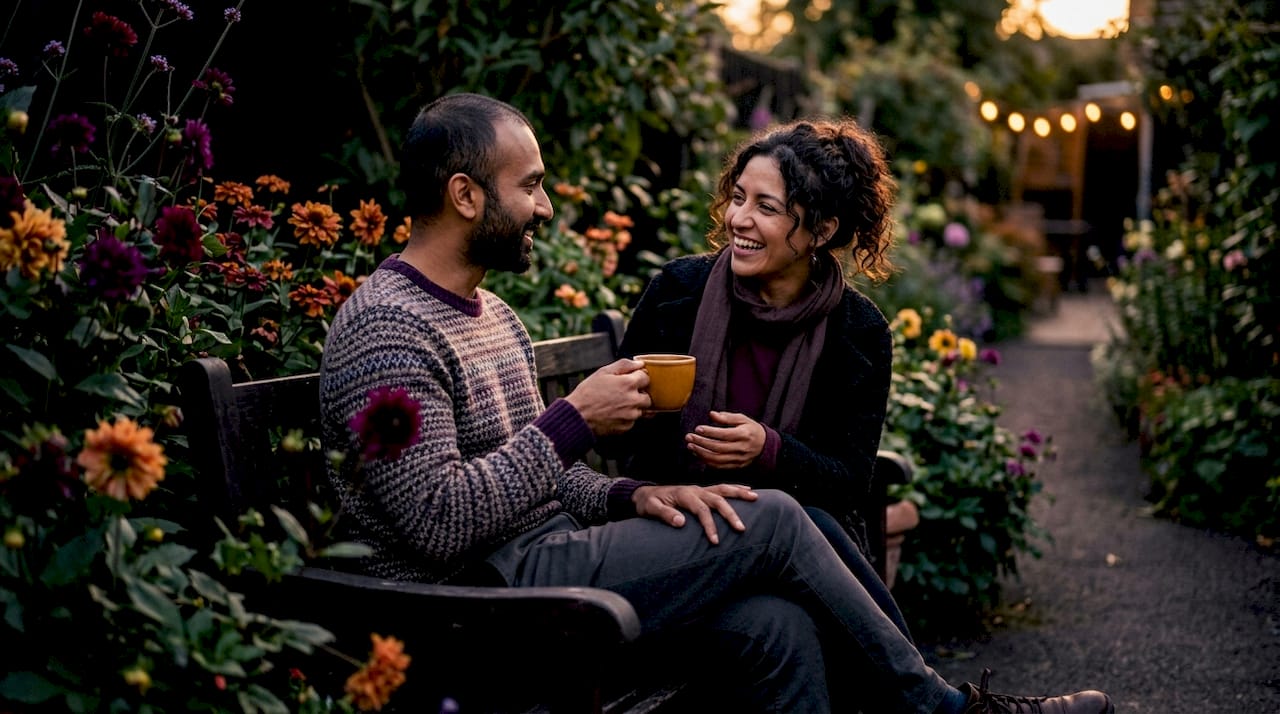
The first shift is treating early messaging as signal gathering, not as the relationship itself. You are not trying to be charming over text. You are trying to learn whether this person can make you feel cared for, and whether you can do the same for them. Research confirms that feeling loved by a partner predicts relationship satisfaction more than your own loving behaviors. That means your focus should be on creating experiences where your potential partner feels genuinely seen, not on performing your best self through witty one-liners.
Here is a practical sequence to follow:
- Limit active conversations to three or fewer. Communication overload is a documented cause of burnout. Fewer chats means more presence in each one.
- Move offline within one to two weeks. Face-to-face interaction is irreplaceable for building real bonds. A walk, a coffee, a shared activity all create vulnerability that texting cannot.
- Ask questions that invite real answers. Skip "how was your weekend" and ask what they are genuinely proud of, or what kind of closeness they are looking for.
- Express care through specifics. Remember what they told you. Reference it. That act of attention communicates warmth more than any compliment.
- Set a weekly rhythm. Recurring contact with the same person builds the kind of familiarity that loneliness research identifies as the real threshold for feeling connected.
Pro Tip: Before your first in-person meeting, write down one thing you genuinely want to know about this person. Not a conversation starter. A real question. It will change the quality of the entire date.
Troubleshooting common dating pitfalls and avoiding burnout
Dating app burnout is not a personal failure. It is a predictable outcome of a system that was not designed with your emotional health in mind.
The BBC Future research on burnout describes it clearly: emotional exhaustion from swiping compounds when done in isolation, and cynicism builds with every disappointing interaction. The antidote is not willpower. It is structure and support.
"Treat dating apps like social media. Set time limits, take breaks, and talk to friends about what you are experiencing. Isolation makes burnout worse."
Signs you need a reset:
- You feel relief, not excitement, when someone does not reply
- You are swiping while watching TV, not while actually paying attention
- You have started assuming bad intent before a conversation even begins
- You feel worse about yourself after an hour on the app than before
When those signs appear, the move is not to push harder. Take a week off. Invest in app-free dating through real-world events, hobby groups, or community spaces. Reconnect with friends. Social support does not just feel good. It actively cushions the emotional strain of rejection and disappointment.
Managing rejection without internalizing it is a skill. One person's disinterest tells you about compatibility, not about your worth. The sustainable habit is to treat each interaction as one data point in a much larger picture, not as a verdict on who you are.
A step-by-step roadmap for finding love offline and online
You do not need to be on every platform. You need to be intentional on the right ones.
Here is a practical roadmap:
- Audit your current apps. If you are using a platform where more than half the users are swiping out of boredom, your effort-to-return ratio will always be poor. Consider switching to Hinge, Bumble, OkCupid, or a community-based model like Sonder.
- Build a profile that requires effort. Answer prompts honestly. Use photos that show you in real contexts, not just posed shots. Effort in signals effort out.
- Schedule one in-person meeting per week. Not a goal. A calendar event. Consistency matters more than intensity.
- Prepare for emotional safety. Before a date, remind yourself that vulnerability is the point. Closeness does not happen without it.
- Invest in recurring connection. Whether it is a second date, a regular event, or a community group, prioritize seeing the same people more than once. The loneliness set-point research is clear: quality and recurrence matter far more than volume.
| Step | Focus | Outcome |
|---|---|---|
| Platform selection | Choose relationship-oriented apps | Higher intent matches |
| Profile effort | Honest, detailed, prompt-based | Filters low-intent users |
| Offline meetings | Weekly in-person contact | Real vulnerability and trust |
| Recurring connection | Same people, repeated contact | Genuine intimacy over time |
| Burnout prevention | Limits, breaks, social support | Sustainable dating experience |
The goal is not to date more. It is to date better.
Key takeaways
Finding meaningful connections beyond Tinder requires choosing platforms built for emotional depth, limiting conversation volume, and prioritizing recurring in-person contact over endless digital chat.
| Point | Details |
|---|---|
| Platform intent matters | Hinge and Bumble attract 82 to 85% serious love seekers versus Tinder's higher boredom-swiping rate. |
| Effort filters sincerity | High-friction sign-ups and prompt-based profiles reduce performative behavior and increase honest interaction. |
| Partner perception drives satisfaction | Helping your partner feel loved predicts relationship satisfaction more than your own loving actions. |
| Volume does not cure loneliness | Quality and recurring contact matter more than the number of matches or conversations. |
| Burnout needs structure | Setting conversation limits, taking breaks, and leaning on social support prevents emotional exhaustion. |
What I have learned from dating beyond the swipe
by Albert
I spent a long time thinking the problem was me. Too specific. Too much to ask for. Then I started paying attention to the system itself, and the picture changed.
Swipe culture is not designed for the kind of closeness most of us actually want. It is designed to keep us swiping. Those are not the same thing. The moment I stopped treating every match as a potential relationship and started treating early conversations as honest compatibility checks, the whole experience became less draining and more real.
The biggest shift for me was moving offline faster. Not because texting is useless, but because you cannot actually feel someone's presence through a screen. Warmth, care, the way someone listens. Those things only exist in a room together. Every time I pushed past the comfort of digital chat and showed up in person, something shifted. The connection either deepened quickly or clarified itself as a mismatch. Both outcomes are useful.
What I keep coming back to is this: recurring connection is the real currency. Not first impressions. Not chemistry in a single conversation. The people who matter in your life are the ones you kept showing up for, and who kept showing up for you. Dating is no different.
Patience is not passive. It is the active choice to keep going, keep showing up, and keep being honest about what you need. That is where the good stuff lives.
— Albert
Sidefocusapp: a space built for the connection you are looking for
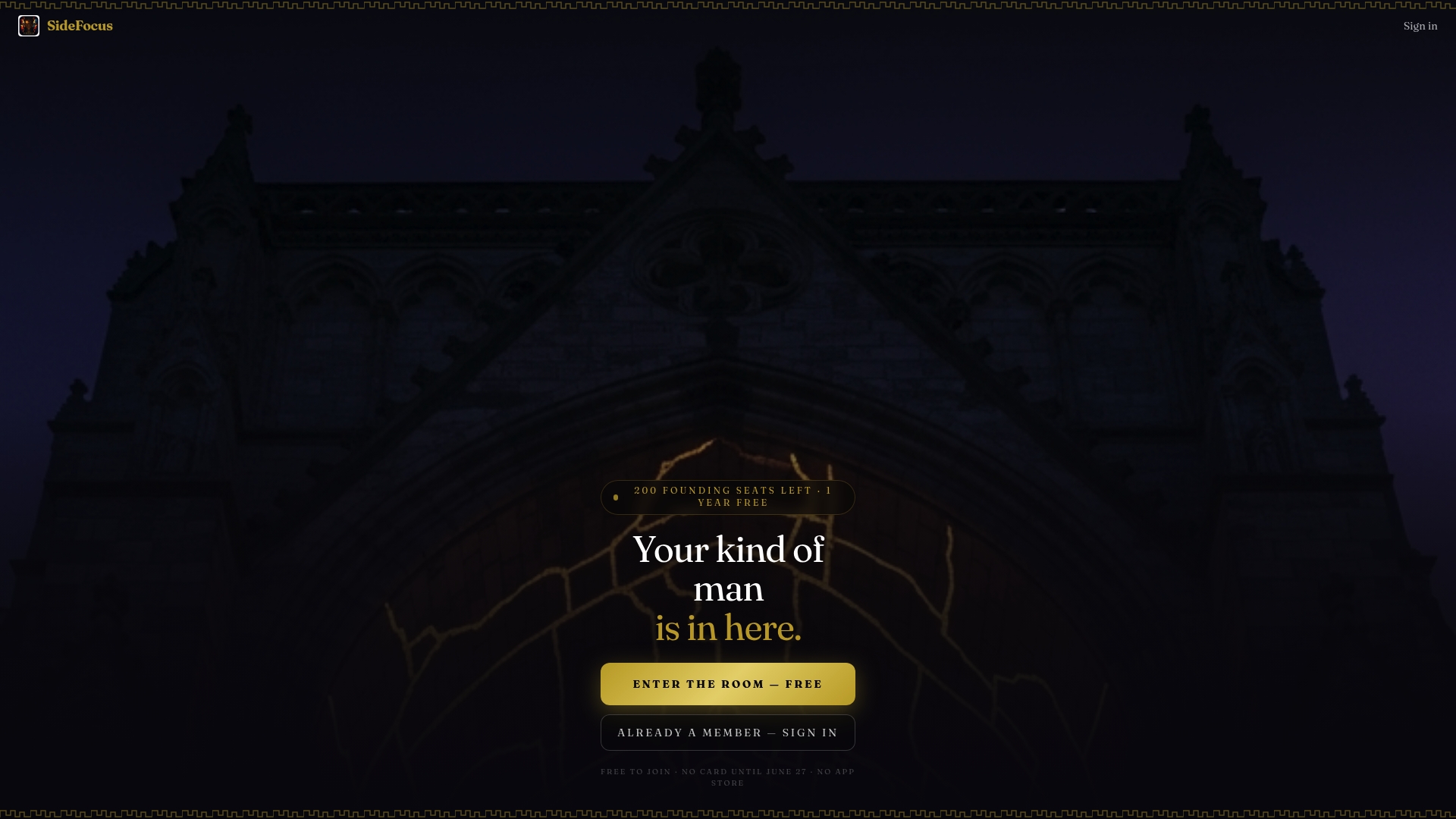
If you are done with performative swiping and ready for something that actually feels like closeness, Sidefocusapp was built with that in mind. It is a relationship platform designed specifically for men who want genuine intimacy, warmth, and presence without the pressure of traditional dating roles. There is no app store installation. No endless queue of strangers. Just a focused community where the point is connection, not performance. Unlimited messaging and community engagement mean you can move at your own pace, in your own way. If that sounds like the room you have been looking for, explore Sidefocusapp and see what it feels like to belong somewhere that gets it.
FAQ
Why does Tinder feel so empty even when you get matches?
Tinder scores highest among dating apps on mood regulation motives, with roughly 50% of swipes driven by boredom rather than genuine romantic intent. That motive mismatch means many matches were never looking for what you are.
What dating apps are better than Tinder for serious relationships?
Hinge attracts 85% serious love seekers and Bumble attracts 82%, compared to Tinder's lower rate. Both use prompt-based profiles that encourage more honest, vulnerability-forward conversations.
How do you avoid dating app burnout?
Set a limit on active conversations, take regular breaks, and talk to friends about your experiences. Research shows that burnout worsens in isolation and improves with social support and structured boundaries.
Does moving offline actually help you connect more deeply?
Face-to-face interaction is irreplaceable for building real emotional bonds. Online-only friendships and connections cannot provide the presence and vulnerability that in-person contact creates.
How many people should you be talking to at once on dating apps?
Keeping active conversations to three or fewer reduces communication overload, which research links directly to emotional exhaustion and the decision to abandon apps entirely.