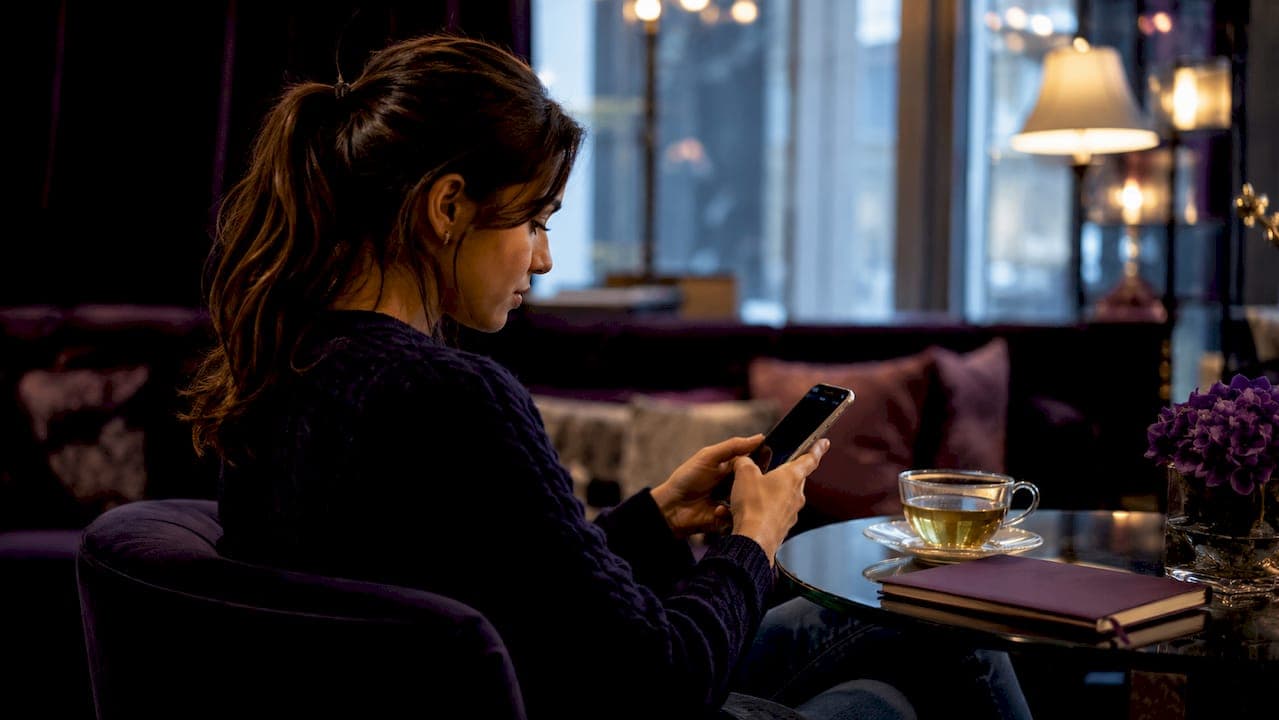
Dating apps fail users not by accident but by design. Platforms like Tinder, Hinge, and Bumble are built to keep you swiping, not to help you find someone worth staying for. Research now confirms what many frustrated daters already feel: the ways dating apps fail users are systemic, measurable, and tied directly to how these companies make money. A 17-year meta-analysis covering roughly 26,000 people found that app users report worse psychological health than non-users, with burnout worsening over time. That is not a personal failure. That is a product doing exactly what it was designed to do.
1. the ways dating apps fail users start with too much choice
The paradox of choice is the psychological principle that more options produce less satisfaction, not more. Dating apps weaponize this effect. When Tinder shows you an endless queue of profiles, your brain registers each swipe as a low-cost decision. The result is that no single person ever feels like enough, because the next profile is always one tap away.
This is not a side effect. It is the core mechanic. Apps are designed so that the feeling of abundance keeps you engaged, even as that same feeling makes genuine commitment feel premature. Decision fatigue sets in fast, and users begin evaluating people the way they scroll news feeds: quickly, shallowly, and without real investment.

Pro Tip: Set a hard limit of 20 swipes per session. Scarcity forces your brain to evaluate more carefully, which is closer to how real attraction actually develops.
Common behavioral patterns that emerge from choice overload include:
- Swiping right on profiles you would never message, just to collect matches
- Abandoning conversations after a few exchanges because "something better" might appear
- Feeling vaguely dissatisfied after hours of browsing, with nothing to show for it
- Cycling back to the app minutes after closing it, chasing a dopamine hit that never quite arrives
2. image-first design trains you to see people as replaceable
Dating apps promote an image-first environment that intensifies self-surveillance and emotional distress. When a profile is built around photos, users learn to evaluate and be evaluated on appearance alone. That is not just superficial. It is psychologically corrosive.
Users adapt to this environment fast. They spend hours editing photos, obsessing over which image gets the most right swipes, and monitoring their match counts like a performance score. Psychology Today's 2026 analysis found this creates a feedback loop where people begin to see both themselves and others as interchangeable, replaceable units rather than full human beings.
Here is the contrast between what apps reward and what actually builds connection:
- Photo quality vs. shared values
- Witty one-liners vs. honest vulnerability
- Match count vs. depth of conversation
- Physical appearance vs. emotional availability
- Response speed vs. genuine interest
The design is not neutral. Every element of a standard dating profile pushes users toward the top of that list and away from the bottom.
3. business models reward engagement, not relationships
Dating app companies design to maximize engagement, not to help users find lasting connections. Match Group, which owns Tinder, Hinge, OkCupid, and several other major platforms, generates revenue when users stay on apps longer and pay for premium features. A user who finds a lasting relationship and deletes the app is a lost customer.
This creates a direct conflict of interest. Features that would genuinely help users, such as richer profile information, structured conversation prompts, or clear commitment signals, are often buried behind paywalls or absent entirely. Meanwhile, features that keep users uncertain and returning, like read receipts, disappearing matches, and vague "boost" mechanics, are front and center.
Pro Tip: Treat premium features with skepticism. If a paid feature promises more visibility or more matches, ask whether it solves a real problem or just sells you the illusion of progress.
The engagement-first model produces specific harms:
- Ghosting is frictionless by design, with no accountability built into the platform
- Ambiguous communication norms leave users anxious and checking the app repeatedly
- Subscription tiers create a pay-to-win dynamic that disadvantages users who cannot afford upgrades
- Scam profiles and bots thrive in high-volume, low-accountability environments
4. ghosting is a feature, not a bug
Ghosting is frictionless and widespread: 84% of users have been ghosted, and 66% have ghosted someone else. Those numbers are not a coincidence. They reflect a platform environment where disappearing carries zero social cost and no mechanism exists to discourage it.
Apps could require a brief closure message before unmatching. They do not. That choice is deliberate. Ghosting keeps the ghosted user anxious, checking the app, and swiping again. Anxiety is engagement. Engagement is revenue.
The psychological cost is real. Being ghosted repeatedly teaches users that other people are unreliable and that emotional investment is dangerous. Over time, this erodes the capacity for the kind of openness that genuine connection requires.
5. emotional exhaustion is documented, not anecdotal
A 2024 study cited by Time found that 78% of dating app users felt emotionally exhausted. That figure represents the majority of people using these platforms. Exhaustion at that scale is not a personal problem. It is a structural one.
The research pool on this topic is now substantial. Here is a summary of key findings:
| Study / Source | Key Finding |
|---|---|
| 17-year meta-analysis, ~26,000 people | App users report worse psychological health and increasing burnout over time |
| 2024 longitudinal study (BBC, 2026) | Heavier use worsens outcomes for users with pre-existing mental health difficulties |
| Time, 2026 | 78% of users report emotional exhaustion linked to endless options and ghosting |
| Economics Letters, 2026 | Tinder exposure linked to higher divorce and separation rates in certain markets |
Each of these findings points in the same direction. The problems with dating apps are not edge cases. They are the median experience.
6. vulnerable users pay the highest price
Heavier dating app use causes worse outcomes for users who enter with pre-existing mental health difficulties. This is one of the most important and least discussed findings in the research. Apps do not affect all users equally. People who are already anxious, lonely, or struggling with self-worth are the most harmed by the validation-seeking cycles these platforms create.
The cruel irony is that these users are also the most motivated to use apps. Loneliness drives engagement. Apps benefit from that loneliness without addressing it. For someone already dealing with depression or low self-esteem, the cycle of matching, brief connection, and then silence or rejection does not build resilience. It deepens the wound.
This is why the challenges in online dating are not just inconveniences. For a significant portion of users, they are genuinely harmful.
7. relationship instability is a measurable outcome
An Economics Letters study from 2026 found that Tinder exposure is linked to higher divorce and separation rates, particularly in male-heavy markets with fewer dating options. Apps do not increase marriage rates. They correlate with greater relationship instability under specific conditions.
This matters because the promise of dating apps is efficiency: more options, faster matches, better outcomes. The data does not support that promise. What apps actually deliver is higher volume with lower commitment depth. That combination produces more relationships that start quickly and end just as fast.
8. the burnout trap cycle keeps you stuck
Researchers describe a specific trap cycle that keeps users stuck: browse profiles, start a conversation, hit a dead end, go on a disappointing date, return to browsing profiles. Repeat. The cycle feels like progress because each step involves action. But the loop produces no lasting outcome and steadily drains emotional energy.
The design of most apps makes this cycle almost inevitable. Profiles are thin by design, so you cannot screen for compatibility before investing time. Conversations happen in a low-stakes environment, so they rarely go deep. Dates carry the full weight of a first impression with none of the warmth that comes from knowing someone over time.
Signs you are caught in this cycle include:
- Feeling drained after time on the app rather than hopeful
- Repeating the same early-stage conversations without them going anywhere
- Losing interest in people quickly after matching, even when nothing went wrong
- Checking the app out of habit rather than genuine desire to connect
If several of these feel familiar, the dating app fatigue you are experiencing is real, and it is the app's architecture at work, not a flaw in you.
9. why dating apps fail long-term seekers most of all
The failures of dating apps hit hardest for people who want something real and lasting. Casual users who want low-commitment encounters get exactly what apps deliver: volume, novelty, and easy exits. But users seeking depth, warmth, and genuine closeness are working against the platform's incentives at every step.
Apps built around superficial interactions have no structural reason to help you find someone who truly sees you. The business model does not reward that outcome. Long-term seekers end up spending months or years in a system that was never designed for them, wondering why it is not working.
Key takeaways
Dating apps fail users primarily because their design and business models prioritize engagement over genuine connection, producing measurable psychological harm and relationship instability.
| Point | Details |
|---|---|
| Engagement over connection | Apps are built to keep you swiping, not to help you find a lasting relationship. |
| Emotional exhaustion is widespread | 78% of users report emotional exhaustion, making burnout the majority experience. |
| Ghosting is structural | 84% of users have been ghosted because apps make disappearing frictionless and cost-free. |
| Vulnerable users are most harmed | Pre-existing mental health difficulties intensify negative outcomes from heavy app use. |
| Long-term seekers face the biggest gap | App design rewards novelty and volume, which directly conflicts with the needs of commitment-oriented users. |
Why i think we've been blaming ourselves for an industry problem
I have spent years watching people walk away from dating apps feeling like something was wrong with them. Too picky. Not attractive enough. Bad at conversation. The self-blame is almost universal, and it is almost always misplaced.
The research is now clear enough to say this plainly: burnout is an app-driven exposure effect, not a personal failure. The platforms are designed to keep you uncertain, engaged, and returning. When that design produces anxiety and exhaustion, that is the system working as intended.
What strikes me most is how the industry has avoided accountability by framing these outcomes as user problems. Match Group does not publish data on how many users find lasting relationships. No major app measures relationship quality as a success metric. They measure daily active users, swipe volume, and subscription revenue.
If you are looking for closeness, warmth, and someone who actually wants to know you, you are not asking for too much. You are asking for something that most mainstream apps were never built to provide. The answer is not to try harder on the same platforms. The answer is to find spaces designed around what you actually need.
— Albert
A different room exists for you
If the cycle of swiping, ghosting, and dead-end conversations has left you exhausted, you are not alone in that feeling. Sidefocusapp was built for men who want something different: real closeness, genuine warmth, and connection that does not require performing for an algorithm. There is no app store download, no pay-to-win tier, and no endless queue designed to keep you anxious. Just a room where presence matters more than profile photos. If you are ready to step away from platforms that were never built for you, explore what Sidefocusapp offers and see what dating looks like when the design actually works in your favor.
FAQ
Why do dating apps cause emotional exhaustion?
Dating apps cause emotional exhaustion through endless choice, frictionless ghosting, and validation-seeking cycles that produce anxiety without resolution. A 2024 study found 78% of users report feeling emotionally drained.
Do dating apps actually help people find lasting relationships?
Research shows apps do not increase marriage rates and are linked to higher divorce rates in some markets. Their design prioritizes engagement over commitment, which works against long-term seekers.
What is dating app burnout?
Dating app burnout is a documented exposure effect where repeated cycles of matching, dead-end conversations, and ghosting deplete emotional energy over time. It is worse for users with pre-existing mental health difficulties.
Why is ghosting so common on dating apps?
Ghosting is common because apps make it frictionless. There is no accountability mechanism, and disappearing keeps the ghosted user anxious and re-engaging with the platform, which serves the app's engagement metrics.
Are some users more harmed by dating apps than others?
Yes. Users who enter with pre-existing anxiety, depression, or low self-worth experience significantly worse outcomes from heavy app use, according to BBC-cited research from 2026.