
Matching fatigue in online dating is defined as the emotional and cognitive exhaustion that builds from repetitive swiping, matching, and messaging that never lead anywhere real. It has a clinical cousin: burnout. And like workplace burnout, it shows up as exhaustion, cynicism, and a creeping sense that nothing you do on these apps will ever work. A 2025 Forbes Health survey found that 78% of dating app users report experiencing this kind of fatigue. That number tells you this is not a personal failing. It is a structural problem baked into how apps like Tinder, Hinge, and Bumble are built.
What is matching fatigue in online dating, and why does it happen?
Matching fatigue is not just about swiping too much. The deeper cause is ambiguity. When a match goes silent, when a conversation dies after three messages, or when someone agrees to meet and then disappears, your brain does not file it under "app glitch." It files it under "something is wrong with me." Peer-reviewed research describes mobile online dating fatigue as arising directly from reciprocal hurtful experiences and the ambiguity users face when interpreting what a match actually means.
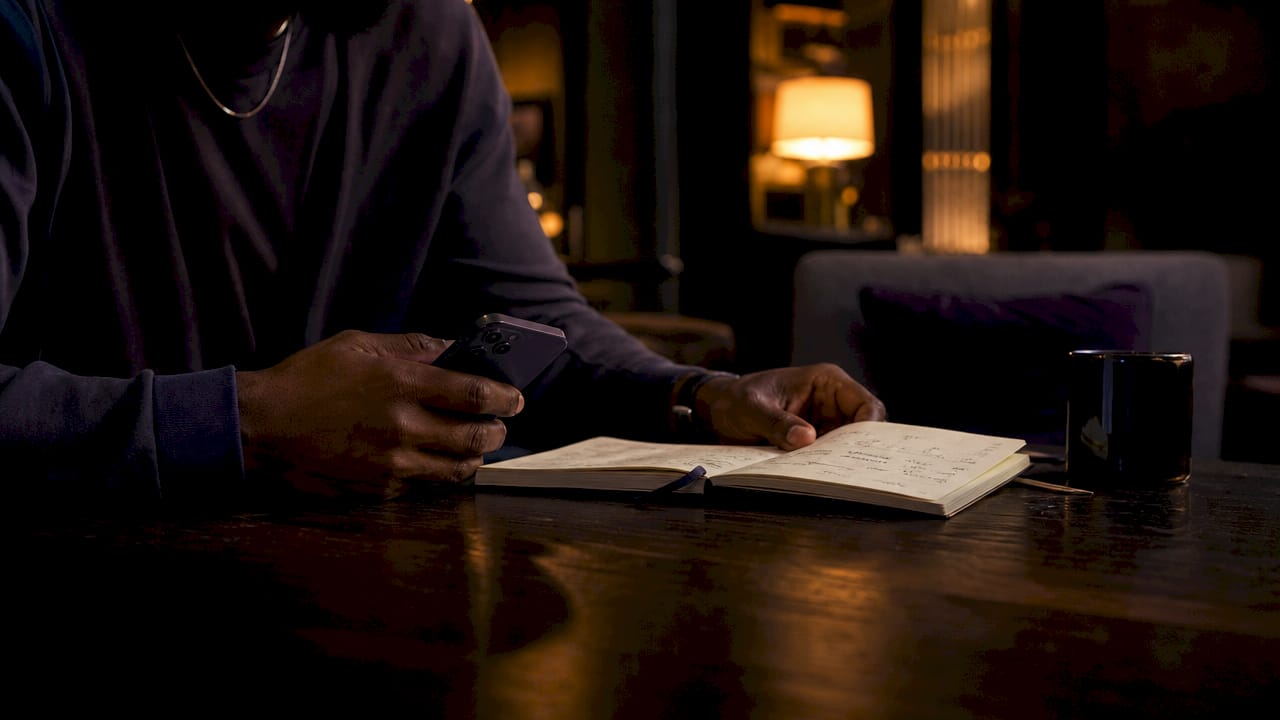
App design makes this worse. Platforms built around endless swiping are not designed to get you off the app. They are designed to keep you on it. That incentive misalignment means the app profits from your engagement, not your connection. The result is a cycle where you keep swiping because stopping feels like giving up, even as the returns diminish.
A 2026 Current Psychology study using the Stressor-Strain-Outcome framework identified four specific stressors that drive dating app exhaustion:
- Communication overload: Too many conversations running at once, each demanding emotional energy
- Information overload: Profiles, photos, and bios flooding your attention without a clear signal of who matters
- Information irrelevance: Most of what you read and respond to leads nowhere, making the effort feel wasted
- Technological vulnerability: The fear of being ghosted, misread, or judged based on a few photos
Each stressor compounds the others. You feel overwhelmed by matches, then guilty for not responding, then numb to the whole process.
Pro Tip: Set a hard limit of 20 minutes per day on dating apps. Treat it like a meeting with a start and end time. This one boundary cuts communication overload significantly without requiring you to delete the app.
What does matching fatigue actually feel like?
Dating app burnout maps onto three clinical dimensions that researchers apply to workplace burnout: exhaustion, cynicism, and reduced efficacy. In the dating context, these show up in very specific ways.
- Emotional exhaustion: You open the app and feel nothing. Not excitement. Not hope. Just a flat, tired reluctance to engage with another stranger's profile.
- Cynicism and depersonalization: You start treating matches as interchangeable. You stop reading bios carefully. Conversations feel like scripts you have run a hundred times before.
- Reduced efficacy: You genuinely believe the app will not work for you. Not because you have evidence, but because nothing has worked yet, and your brain has started treating that pattern as permanent.
- Behavioral withdrawal: You cancel dates you had been looking forward to. You ghost people not out of cruelty but because responding feels like too much. You delete the app, reinstall it a week later, and feel the same way within days.
- Dehumanization: Interactions start to feel transactional. You are aware that you are being evaluated on a few photos and a handful of words, and you are doing the same to others. That awareness erodes warmth fast.
The most insidious symptom is the negative self-fulfilling loop. Research shows that when users misread low match-to-date conversion as personal failure, they enter a cycle where low confidence produces worse interactions, which produces worse outcomes, which confirms the original fear. Recognizing this as a system-level problem, not a personal one, is the first real step out of it.
Matching fatigue vs. dating app burnout vs. swiping fatigue
These three terms overlap, but they describe different parts of the same problem. Understanding the distinction helps you identify exactly where your exhaustion is coming from.
| Term | Core cause | Primary symptom | Scope |
|---|---|---|---|
| Matching fatigue | Ambiguous match signals and stalled conversations | Cynicism and distrust of connections | Match and message cycle |
| Dating app burnout | Cumulative emotional depletion from app use | Full exhaustion, hopelessness, quitting | Entire app experience |
| Swiping fatigue | Volume of profiles and repetitive evaluation | Decision fatigue, numbness to profiles | Profile browsing only |
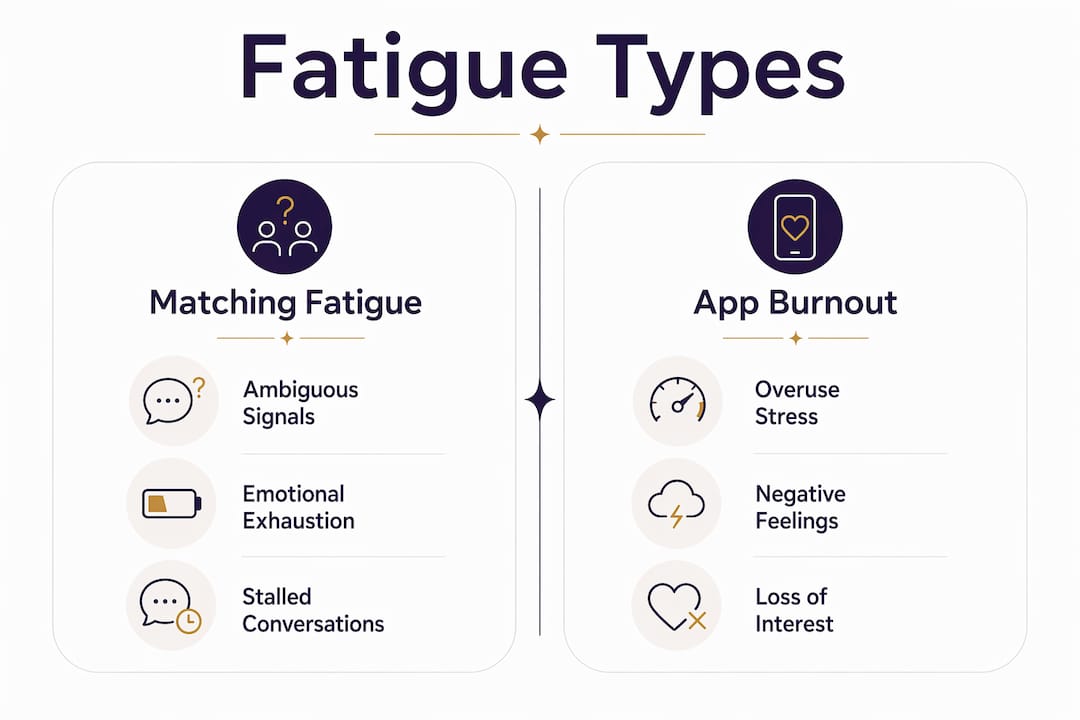
Swiping fatigue hits first. It is the shallow end of the pool. You get tired of evaluating faces and bios. Matching fatigue goes deeper. It is the specific pain of getting a match, investing in a conversation, and watching it dissolve without explanation. Dating app burnout is the full collapse. It is what happens when matching fatigue and swiping fatigue accumulate long enough that the whole system feels broken.
The BBC Future analysis of dating app burnout notes that app design actively encourages constant swiping, which accelerates the path from swiping fatigue to full burnout. The apps are not neutral tools. They are environments that shape your emotional state.
How to cope with dating fatigue and recover your sense of connection
Recovery from matching overload in dating is not about trying harder. It is about changing the conditions that created the fatigue in the first place.
- Take a real break. When optimism has fully eroded, stepping away from apps is not quitting. It is recovery. A two-week break resets your baseline more effectively than pushing through.
- Reduce the number of active conversations. Pick three conversations to invest in. Let the rest go quiet. Depth beats volume every time.
- Seek social support outside the apps. Isolation amplifies fatigue. Talking to friends about your experience, or finding community with people who understand the specific pressures you face, interrupts the spiral.
- Try app-free dating approaches. In 2026, more people are returning to social events, hobby groups, and community spaces as primary ways to meet people. The absence of a swiping interface removes several stressors at once.
- Reframe what a match means. A match is not a promise. It is a weak signal of mild interest. Treating it as anything more sets you up for the ambiguity spiral that drives fatigue cycles.
- Look for platforms built around connection, not engagement. Some alternatives to mainstream apps are designed to reduce superficial matching dynamics by prioritizing quality of interaction over quantity of swipes.
Pro Tip: When you reinstall a dating app after a break, set one clear intention before you open it. "I want to find one person worth a real conversation this week." One. That single constraint changes how you engage with everything you see.
A qualitative study of 27 users found that people experiencing dating fatigue often oscillate between criticizing the apps and clinging to them. They know the apps are not working. They keep using them anyway. Deliberate breaks and meaningful alternatives are the two interventions that actually break that cycle.
Key Takeaways
Matching fatigue is a structural problem created by app design and ambiguous signals, not a reflection of your worth or desirability.
| Point | Details |
|---|---|
| Matching fatigue defined | It is emotional and cognitive exhaustion from repetitive, unresolved match and message cycles. |
| Prevalence is high | 78% of dating app users report experiencing burnout, making this a widespread issue. |
| App design is a cause | Platforms prioritize engagement over genuine connection, accelerating fatigue. |
| Ambiguity drives the cycle | Unclear match signals create distrust and negative self-fulfilling patterns. |
| Recovery requires change | Taking breaks, reducing conversation volume, and seeking meaningful alternatives all aid recovery. |
What I have learned about matching fatigue after years of watching it up close
I have seen the same pattern repeat too many times to ignore it. Someone starts using a dating app with genuine hope. Within weeks, that hope curdles into something harder and more guarded. They are not less worthy of connection than when they started. The app has just done what it was designed to do: keep them swiping.
The thing that most articles miss is that matching fatigue is not a motivation problem. You cannot fix it by trying harder or writing a better bio. The stressors are structural. Communication overload, information irrelevance, and the ambiguity of what a match actually signals are all features of the system, not bugs. Addressing them requires changing your relationship with the system, not improving your performance within it.
What I find genuinely useful is the idea of seeking out spaces where the rules are different. Not every platform runs on the same incentive structure. Some communities are built around closeness and presence rather than volume and performance. Those spaces feel different from the first message. The warmth is real because the design supports it. That is not a small thing. It is the whole thing.
If you are feeling the weight of matching overload right now, the most honest advice I can give is this: the exhaustion you feel is a reasonable response to an unreasonable environment. You are not broken. The room you have been sitting in just has bad air. Find a different room.
— Albert
A different kind of space for connection
Sidefocusapp was built for men who want closeness without the noise. No endless swiping queue. No ambiguous match signals that leave you guessing. The platform offers unlimited messaging and genuine community engagement, without the app store friction that adds one more barrier between you and the people you actually want to reach. If dating app fatigue has left you numb to the whole process, Sidefocusapp offers a quieter room where warmth and care are the point, not a side effect. The door is small on purpose. The people inside it are there for the same reason you are.
FAQ
What is matching fatigue in online dating?
Matching fatigue is emotional and cognitive exhaustion caused by repetitive swiping, matching, and messaging that fail to produce meaningful connections. It combines ambiguity about match signals with communication overload, creating cynicism and reduced motivation.
How is matching fatigue different from general dating app burnout?
Matching fatigue focuses specifically on the match and message cycle, where ambiguous signals and stalled conversations create distrust. Dating app burnout is broader, covering full emotional depletion from the entire app experience.
What causes matching overload in dating apps?
App design that rewards engagement over genuine connection is the primary driver. Communication overload, information irrelevance, and ambiguous match signals all compound to create the exhaustion users feel.
How do you cope with dating fatigue effectively?
Taking a complete break from apps when optimism has eroded is the most direct intervention. Reducing active conversations to a small number and seeking social support outside the apps also interrupt the fatigue cycle.
Can switching platforms reduce dating app overwhelm?
Yes. Platforms designed around connection quality rather than swipe volume remove several key stressors. Reducing the ambiguity of match signals and limiting communication overload directly addresses the root causes of matching fatigue.