
Dating app burnout is a psychological state defined by three core markers: emotional exhaustion, cynicism toward profiles and interactions, and a persistent sense that effort will never lead to results. It is not a personal weakness. Dating fatigue affects nearly 80% of active app users, which means the odds are strong that what you are feeling is real and widely shared. A 2026 meta-analysis of 26,000 individuals confirmed that app users report higher depression, anxiety, and loneliness than non-users. Using this dating app burnout signs checklist early gives you the clearest path back to connection that actually feels good.
1. What emotional exhaustion looks like in dating app burnout
Emotional exhaustion is the first and most common sign of dating app burnout. You open the app and feel a low, heavy dread instead of curiosity. Swiping, which once felt like possibility, now feels like a second job you never applied for.
The reason this happens is structural. Sustained self-presentation and evaluation are deeply depleting forms of emotional labor. Every profile you craft, every opener you write, and every conversation you manage pulls from the same finite reserve of social energy. When that reserve runs dry, the app stops feeling like a door and starts feeling like a wall.
Watch for these specific signs of emotional exhaustion:
- You cancel dates you were once excited about, citing tiredness with no clear physical cause.
- You open the app, stare at it for a few seconds, and close it without doing anything.
- You feel relief, not disappointment, when a match goes quiet.
- You dread the notification sound from your dating app.
- Your mood drops noticeably during or after time spent on the app.
The contrast with how you felt when you first signed up is telling. Early enthusiasm fading into flat indifference is a textbook signal. Modern dating culture also rewards emotional self-sufficiency, which pushes people to suppress genuine needs. That suppression compounds exhaustion fast.
Pro Tip: Track your mood for one week before, during, and after app use. If you consistently feel worse after opening the app, that pattern is data. You are not imagining it.
2. Recognizing cynicism and depersonalization in dating interactions
Cynicism is the second pillar of dating app burnout, and it is the one most people misread as personality change. You start viewing profiles as interchangeable objects rather than real people. You stop believing the process can work at all.
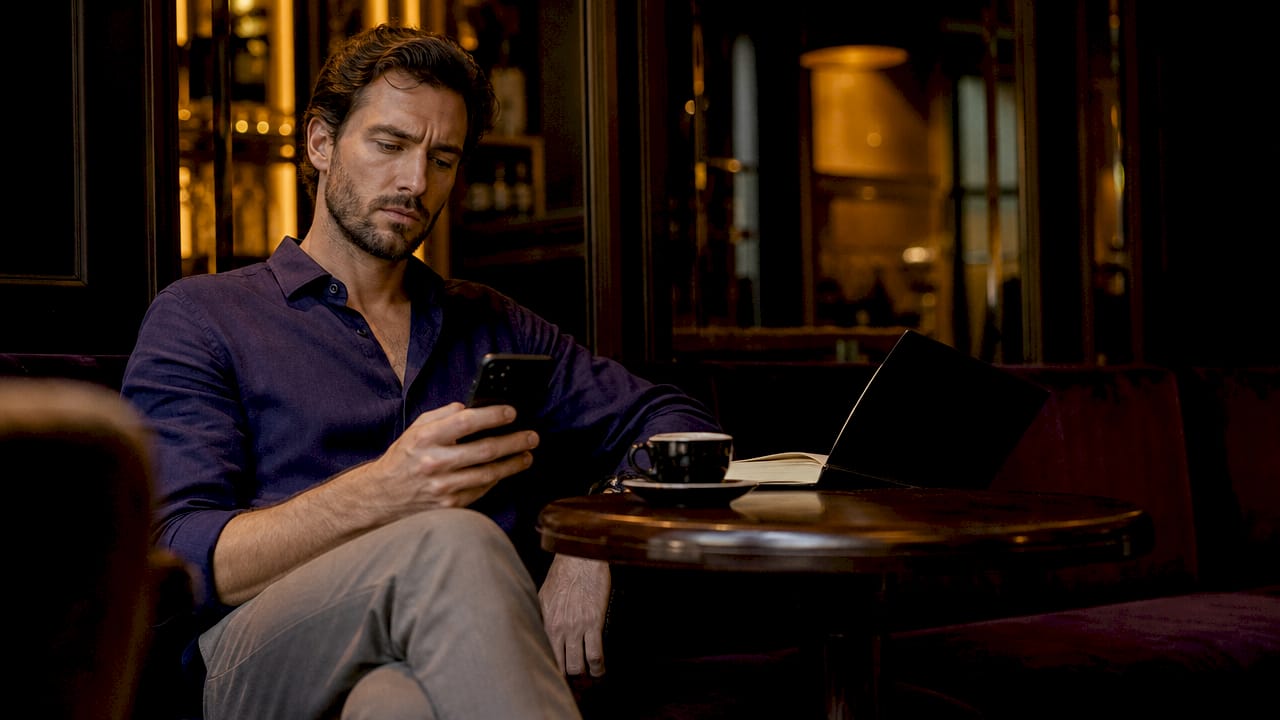
This psychological distancing has a name: depersonalization. In the burnout context, it means you mentally check out from the human on the other side of the screen. Profiles blur together. Conversations feel scripted. You go through the motions without any real presence.
Apps are designed to incentivize engagement, not connection. That design mismatch is a key driver of cynicism. The platform profits from your time on it, not from your happiness off it. Recognizing that the system is built this way makes cynicism feel less like a character flaw and more like a rational response to a broken incentive structure.
Ghosting and silent unmatching accelerate this process. Industrialized rejection, meaning the high volume of ghosting and silent disappearances, chips away at self-worth continuously. Each unanswered message adds a small weight. Over months, those weights stack.
Signs of cynicism to watch for:
- You assume every match will ghost before the conversation even starts.
- You feel contempt or irritation reading profiles that would have interested you before.
- You catch yourself thinking "what's the point" mid-swipe.
- You no longer believe the app can lead to anything real.
- You mock the process privately, even to yourself.
If you recognize more than two of these, the dating app frustrations you are feeling have crossed from frustration into burnout territory.
3. Understanding the feeling of inefficiency and loss of faith
Inefficiency, the third burnout marker, is the belief that no amount of effort will produce a meaningful result. You scroll endlessly and feel no forward motion. You put work into a profile update and feel nothing change. The effort-to-reward ratio feels broken.
The maximizer mindset drives this feeling hard. Maximizer-style daters scan every possible option before deciding, which creates chronic evaluation fatigue. The more options an app presents, the more exhausting each decision becomes. Choice overload reduces satisfaction even when a good match appears, because the brain is too tired to feel good about it.
This is where dating app design fails users most visibly. Infinite scroll and unlimited swipes are features built for engagement metrics, not for human decision-making capacity. The result is a feeling of running in place.
Pro Tip: Try the satisficing strategy: set a clear "good enough" standard before opening the app, then stop swiping the moment you find one profile that meets it. This breaks the maximizer loop and restores a sense of control.
4. Checklist: 9 clear signs you might be experiencing dating app burnout
This checklist pulls together the behavioral and emotional signals that research and clinical observation consistently identify. Read each one and notice your honest reaction.
- You feel drained after using the app, not energized. Energy loss after social activity is a core burnout indicator, not a sign you are introverted.
- Swiping feels like a chore you procrastinate on. When something you once did voluntarily becomes something you avoid, the motivation structure has shifted.
- You ignore messages for days without guilt. Emotional numbness toward matches signals depersonalization.
- Profiles all look the same to you. This blurring effect is a direct symptom of evaluation fatigue from choice overload.
- You feel irritable or anxious when you think about dating. Irritability tied to a specific activity is a stress indicator worth taking seriously.
- You assume bad outcomes before conversations begin. Anticipatory cynicism means burnout has reshaped your baseline expectations.
- You have stopped updating your profile even though you are unhappy with it. Learned helplessness, the belief that action is pointless, is a late-stage burnout signal.
- You feel lonelier after using the app than before. A 2026 study confirmed that app use correlates with higher loneliness compared to non-use. Feeling worse after logging in is not ironic. It is expected.
- You have lost interest in dating altogether, not just the app. When burnout generalizes beyond the platform to the entire idea of connection, it needs direct attention.
If you checked five or more of these, you are experiencing dating app burnout. That recognition is not just reassuring. It is the first step toward doing something about it.
5. Practical strategies to break the dating app burnout cycle
Recovery from app fatigue is not about pushing harder. It is about breaking the volume cycle and rebuilding social energy from a different source.
Take a complete break first. A 1–2 week total pause from all dating apps is the most effective reset. Delete the apps from your home screen. Do not check them. This is not giving up. It is giving your nervous system room to recover.
Set strict time limits when you return. A 20-minute daily window with a hard stop prevents the endless scroll that feeds evaluation fatigue. Use a phone timer. When it goes off, close the app regardless of where you are in a conversation.
Limit concurrent conversations. Breaking the volume cycle means fewer simultaneous chats, not more. Three active conversations at a time is a manageable ceiling for most people. More than that dilutes presence and accelerates cynicism.
Move to low-stakes in-person meetings faster. Long text exchanges before meeting in person increase emotional investment without real-world grounding. A short coffee or walk within a week of matching reduces the pressure and filters faster.
Diversify your social outlets. Clubs, classes, and friend introductions shift the pressure away from apps entirely. When apps are your only social channel, burnout hits harder because there is no relief valve. App-free dating options are growing precisely because people are finding this out.
Lean on social support. Talking through dating ups and downs with friends cushions burnout and prevents negative spirals. Isolation makes burnout worse. Connection, even outside of dating, is part of the cure.
| Reset strategy | Primary benefit | Suggested duration |
|---|---|---|
| Complete app break | Nervous system recovery | 1–2 weeks |
| 20-minute daily limit | Reduces evaluation fatigue | Ongoing |
| Cap concurrent chats at 3 | Restores presence and focus | Ongoing |
| Fast move to in-person | Reduces emotional investment risk | Per match |
| Non-app social outlets | Relieves pressure from apps | Weekly habit |
Key takeaways
Dating app burnout is a real psychological condition defined by emotional exhaustion, cynicism, and a sense of inefficiency, and it affects the large majority of active app users.
| Point | Details |
|---|---|
| Burnout is structural, not personal | Apps are designed for engagement, not wellbeing, making burnout a predictable outcome. |
| Three core markers define it | Emotional exhaustion, cynicism, and inefficiency are the clinical pillars of dating burnout. |
| The checklist works for self-assessment | Five or more signs from the checklist indicate active burnout that needs direct attention. |
| Breaks are the most effective reset | A 1–2 week complete pause from apps is the single most recommended recovery step. |
| Diversifying social outlets prevents relapse | Non-app connection reduces dependence and rebuilds the social energy apps deplete. |
What I have actually seen about dating app burnout
I have talked with a lot of people who came to Sidefocusapp after years of grinding through mainstream apps. The pattern is almost always the same. They did not burn out because they were doing something wrong. They burned out because the apps were doing exactly what they were built to do: keep people swiping, not connecting.
The thing that strikes me most is how long people wait before naming what they are feeling. They call it laziness. They call it being picky. They call it "just needing a break." What they are actually describing, almost word for word, is the clinical definition of burnout: exhaustion, cynicism, and the belief that nothing will work.
My honest advice is this: honor your pace. If the app feels like a job you hate, stop going to work. A two-week break is not failure. It is maintenance. And when you come back, come back with a smaller footprint. Fewer conversations. Faster in-person meetings. Clearer intentions.
The men I see find their way to real connection are not the ones who swiped the most. They are the ones who got honest about what they actually wanted and stopped performing for an algorithm. That shift, from performance to presence, is where warmth and closeness actually live.
— Albert
A different kind of space for men who want real closeness
If the checklist above felt uncomfortably familiar, you are not alone. And the answer is not to download another app that runs on the same broken model.
Sidefocusapp is built for men who identify as Sides, those who want genuine intimacy and emotional closeness without the performance that mainstream apps demand. There are no swipe queues designed to keep you scrolling. There is unlimited messaging and a community built around presence, not volume. The door is small on purpose. It is meant for people who know what they are looking for and are tired of pretending otherwise. If that sounds like where you are right now, find real connection at Sidefocusapp and see what dating feels like when the platform is actually on your side.
FAQ
What is dating app burnout?
Dating app burnout is a psychological condition marked by emotional exhaustion, cynicism toward matches and profiles, and a persistent belief that effort will not lead to results. Research confirms it affects nearly 80% of active app users.
Is dating app burnout real or just frustration?
Dating app burnout is clinically distinct from ordinary frustration. A 2026 meta-analysis found that app users show higher rates of depression, anxiety, and loneliness than non-users, confirming it as a measurable psychological outcome.
How long does it take to recover from dating app burnout?
A 1–2 week complete break from all apps is the most recommended starting point for recovery. Full recovery depends on also addressing the habits, like maximizer swiping and suppressed emotional needs, that caused burnout in the first place.
What causes the feeling that dating apps are pointless?
That feeling is the inefficiency marker of burnout, often driven by the maximizer mindset and choice overload from infinite scroll. The more options an app presents, the harder each decision becomes, until the whole process feels futile.
Can you use dating apps without burning out?
Yes, with strict limits. Setting a 20-minute daily cap, capping concurrent conversations at three, and diversifying social outlets beyond apps significantly reduces burnout risk over time.