
Dating apps prioritize quantity over quality as a deliberate business and design choice. Platforms like Tinder, Hinge, and Bumble are built to maximize engagement and retention, not to help you find a lasting relationship. A 2026 analysis in The Conversation confirms that apps commodify social bonds and encourage endless swiping rather than satisfaction. The industry term for this is engagement optimization, and understanding it changes how you see every swipe, match, and upsell you encounter. This article breaks down the design mechanics, psychological costs, monetization traps, and social patterns that keep quantity-first dating locked in place.
Why dating apps prioritize quantity over quality by design
The interface of a dating app is not neutral. Every scroll, swipe, and notification is engineered to keep you in evaluation mode rather than commitment mode. Interface choices like infinite scroll and rapid swipe gestures prevent deep compatibility assessment and encourage ongoing engagement rather than commitment.
Here is what that looks like in practice:
- Infinite scroll removes natural stopping points. There is always one more profile to see, so you never feel finished.
- Gamification mechanics create a slot-machine feedback loop. The unpredictable reward of a match triggers the same dopamine response as a pull on a lever.
- Rapid evaluation reduces each person to a photo and a headline. Deep compatibility questions never get asked.
- Paywalls on quality features mean that meaningful actions, like seeing who liked you or sending a highlighted message, cost money. The free tier is designed to frustrate, not satisfy.
This is not accidental. Apps lose revenue when users succeed and leave. Keeping you in the pool, swiping and upgrading, is the entire dating app strategy.
Pro Tip: Before opening any dating app, set a hard session limit of 15 minutes. Research from BBC Future links burnout to app mechanics and recommends session boundaries as a first line of defense against the endless evaluation cycle.
What does endless swiping do to your mental health?
The psychological cost of quantity-focused dating is real and measurable. A 2026 study in Current Psychology identifies four primary stressors on dating apps: communication overload, information overload, irrelevance, and technological vulnerability. Each one drives social media exhaustion and increases the likelihood that users quit entirely.
What exhaustion looks like on the ground:
- Communication overload: Too many conversations running at once, most of them going nowhere.
- Information irrelevance: Profiles that clearly do not match your needs still flood your feed because the algorithm prioritizes engagement, not fit.
- Technological vulnerability: Concerns about privacy, data use, and the emotional exposure of putting yourself on a platform you do not control.
- Burnout and cynicism: Repeated rejection and ghosting erode trust and make genuine openness feel risky.
"Burnout is a systemic problem tied to app design, not user weakness." — BBC Future, 2026
That reframe matters. If you feel worn down by dating apps, the design is working exactly as intended. The load and irrelevance stressors that cause exhaustion are features, not bugs. They keep you scrolling in search of relief that the platform is not built to deliver. Understanding this is the first step toward reclaiming your experience. You can read more about the specific triggers in this breakdown of dating app frustrations in 2026.
How monetization models block genuine matches
The business model of most dating apps creates a structural conflict of interest. If you find a great match and delete the app, the platform loses a paying customer. That conflict shapes every product decision.
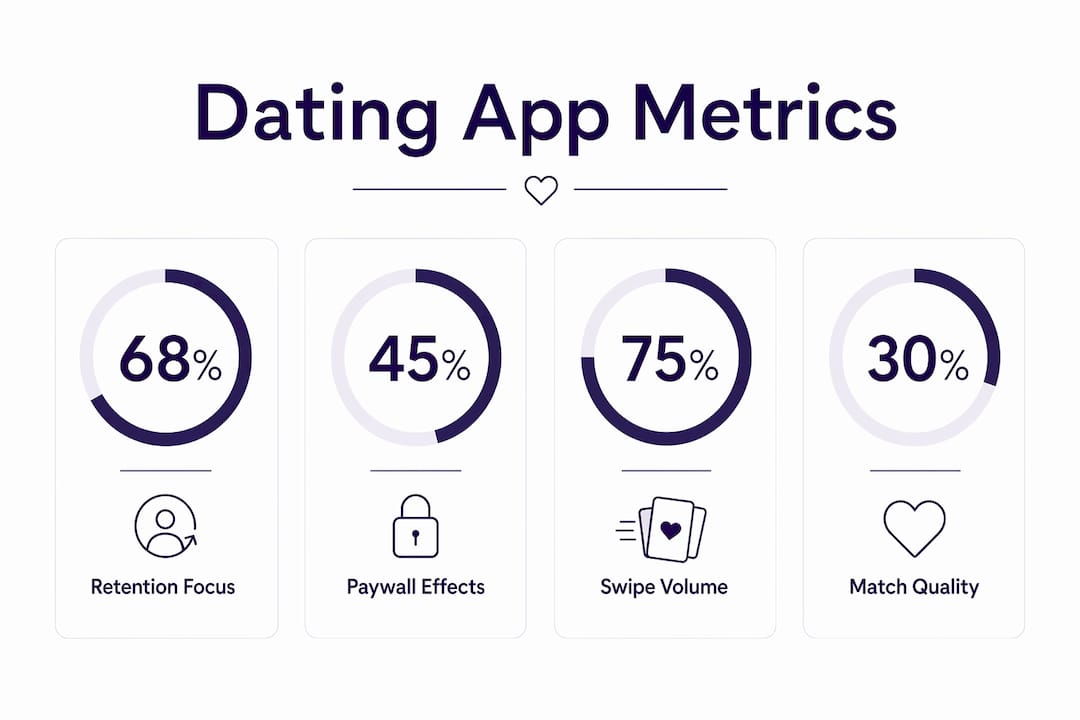
A 2026 report by the Groundwork Collaborative documents specific tactics that misalign app incentives with users' goals. The most telling example is Hinge's "rose jail," where users who send too many free roses get locked out of a key engagement feature until they upgrade to a paid tier. Scarcity is engineered, not organic.
| Monetization Tactic | How It Works | Impact on Users |
|---|---|---|
| Paywalled visibility | Paying users appear higher in feeds | Free users get fewer matches, feel invisible |
| Rose jail / boost limits | Key actions gated behind upgrades | Users pay to restore normal functionality |
| Shadowbanning | Low-engagement profiles get deprioritized | Users upgrade hoping to fix reach |
| Dynamic pricing | Subscription costs vary by user profile | Some users pay more for the same features |
| Match withholding | Promising matches held back to extend sessions | Users stay active longer without satisfying outcomes |
Retention-based monetization biases surfaced matches toward maximizing interactions rather than supporting relationship formation. The result is a system where your goal, finding a real connection, directly conflicts with the platform's goal, keeping you subscribed.
Do dating apps encourage quantity in how people message?
Social dynamics on dating apps push users toward volume-based messaging for a specific reason. Low-quality opening messages generate high rates of rejection, and rejection leads to ghosting. Ghosting kills conversation threads. So users send more messages to compensate.

A 2026 Springer Nature study found that 34% of responses to explicit initiation messages are avoidance responses. That is more than one in three conversations that never get off the ground. Women experience avoidance responses at significantly higher rates, which shapes how both sides of a conversation approach the interaction.
The cycle looks like this:
- A user sends a low-effort or inappropriate opening message.
- The recipient avoids, rejects, or ignores it.
- The sender moves on and sends the same message to the next match.
- Low-quality messages increase ghosting and thread churn, which reinforces a volume-first approach.
This is quantity versus quality dating made visible at the conversation level. The app design that rewards fast swiping also rewards fast messaging. Depth never gets a chance to form.
Pro Tip: Write one specific line about something in the other person's profile before anything else. It signals attention and care, two things that stand out sharply in a feed full of generic openers. Specificity is the fastest way to break the volume cycle.
Practical ways to improve your dating app experience
You cannot change how apps are built, but you can change how you use them. These steps work with the system's limitations rather than against them.
- Set a session timer before you open the app. Fifteen to twenty minutes is enough for meaningful browsing. More than that and you are in the scroll loop, not the connection loop.
- Do a mood check before swiping. If you are tired, stressed, or already frustrated, the app will feel worse and your choices will reflect that. Log off and come back when you have more presence.
- Prioritize platforms built around well-being. Some apps and communities are designed around features that build real bonds rather than engagement metrics. They exist, and they feel different.
- Measure success by conversation quality, not match count. One real exchange beats fifty silent matches. Redefining what counts as progress changes your relationship with the app entirely.
- Take scheduled breaks. BBC Future's 2026 reporting on dating app burnout recommends planned time off as a direct counter to the exhaustion cycle. A week away resets your expectations and your energy.
- Consider offline or community-based meeting. Apps are one channel, not the only one. Social groups, shared-interest events, and community spaces produce connections that apps structurally cannot replicate.
The goal is not to use dating apps less. The goal is to use them with full awareness of what they are optimized for, so you can protect what you actually want.
Key takeaways
Dating apps prioritize quantity over quality because their business models depend on keeping users engaged, not on helping them succeed.
| Point | Details |
|---|---|
| Design drives volume behavior | Infinite scroll and gamification keep users in evaluation mode rather than commitment mode. |
| Psychological costs are real | Communication overload and irrelevance cause measurable exhaustion and push users toward quitting. |
| Monetization conflicts with your goals | Tactics like paywalls and engineered scarcity extend app use at the expense of genuine matches. |
| Social dynamics reinforce quantity | High rejection rates from low-quality messages push users toward volume-based messaging strategies. |
| You can reclaim your experience | Session limits, mood checks, and quality-focused platforms reduce burnout and improve outcomes. |
The mismatch nobody talks about honestly
I have spent years watching people pour real emotional energy into systems that are not built to return it. The mismatch between what users want, closeness, warmth, someone who actually sees them, and what apps deliver, more options, more friction, more reasons to stay subscribed, is not a glitch. It is the product.
What bothers me most is how the design trains users into a mindset of replaceability. Product incentives train users into dissatisfaction and replaceability thinking rather than satisfaction and commitment. You start to see people as profiles to evaluate rather than humans to know. That shift happens quietly, and it does real damage to how you show up in actual relationships.
The broader social impact of commodified dating is something we are only beginning to understand. When connection becomes a transaction, care becomes a premium feature. That is not cynicism. That is just what the data shows.
My honest belief is that the users who do best on these platforms are the ones who go in with their eyes open. They know the app is not rooting for them. They use it as a tool with a specific, limited purpose, and they build their real sense of belonging somewhere else. Somewhere that actually has room for presence, not just profiles. You can find more on what that looks like in this piece on meaningful connections beyond Tinder.
— Albert
A different kind of room
If you recognize yourself in any of this, you are not alone. And you do not have to keep playing a game that was never designed for you to win.
Sidefocusapp was built for men who want something the mainstream apps were never going to give them. Warmth. Presence. A place where closeness is the point, not a paid upgrade. There are no app store hoops to jump through. Just a community built around genuine intimacy and unlimited conversation, without the performance. If you are ready to feel like you belong somewhere rather than just scroll through it, start here at Sidefocusapp. The door is small on purpose. That is what makes it worth walking through.
FAQ
Why do dating apps focus on user numbers over relationships?
Dating apps generate revenue through subscriptions and engagement, not successful matches. A user who finds a relationship and deletes the app stops paying, so platforms are built to extend use rather than complete it.
How do dating app algorithms affect relationship quality?
Dating app algorithms prioritize profiles and matches that keep users active and swiping, not profiles that are the best compatibility fit. This means the feed is optimized for engagement, not for meaningful outcomes.
What is dating app burnout and how does it happen?
Dating app burnout is a state of exhaustion and cynicism caused by communication overload, repeated rejection, and endless choice. A 2026 BBC Future report identifies it as a systemic design problem, not a personal failure.
Do dating apps encourage quantity messaging strategies?
Yes. Research shows that high rejection rates from low-quality opening messages push users toward sending more messages rather than better ones, reinforcing a volume-first approach to conversation.
What can i do to improve my dating app experience?
Set session time limits, do mood checks before opening the app, and prioritize platforms built around genuine connection rather than engagement metrics. Scheduled breaks also reduce burnout and reset your expectations.