
Men who identify as Sides face a specific set of common struggles sides experience dating that most mainstream advice completely ignores. A "Side" is a gay or bisexual man who prefers intimacy built on closeness, warmth, and emotional presence rather than the performance-driven dynamics of conventional dating culture. The core tension is clear: Sides want slow, steady connection, but modern dating rewards speed, volume, and surface-level intensity. Research from 2026 shows 71% of young adult men lack confidence initiating romantic encounters. That number tells you how widespread the problem is, and for Sides it cuts even deeper.
1. Common struggles sides experience dating: the confidence gap
Low confidence is the first wall Sides hit. Only 1 in 3 young adult men feels comfortable starting romantic connections, and that statistic reflects a broader cultural failure to teach men how to connect emotionally rather than just perform attraction.
For Sides, this gap is sharper. Mainstream dating culture rewards bold, high-energy pursuit. Sides tend to lead with warmth and patience. That style gets misread as hesitation or disinterest, which chips away at confidence over time.
The problem compounds because dating apps are built around gamified optimization. Swiping, matching, and crafting the perfect profile trains men to perform rather than connect. Sides end up chasing a version of themselves that doesn't feel real.
- Recognize the source. Low confidence often comes from comparing your relational style to a standard that was never built for you.
- Practice low-stakes presence. Build comfort through genuine conversation, not rehearsed openers.
- Reject the optimization trap. Profile tweaking and response-rate tracking pull you further from authentic connection.
- Seek feedback from community. Talking with other Sides normalizes your experience and builds real self-assurance.
Pro Tip: Treat each conversation as a chance to be known, not a chance to impress. Sides build confidence through genuine exchange, not performance.
2. Emotional exhaustion from dating apps
Dating app burnout is not a personal weakness. It is a structural outcome. Dating app burnout resembles job-related exhaustion, complete with cynicism, hopelessness, and depersonalization. That clinical framing matters because it names what many Sides feel but struggle to articulate.
The numbers back this up. 78% of dating app users report emotional exhaustion, and 84% have experienced ghosting. Less than 30% have the resilience to bounce back after rejection. For Sides, who invest emotionally early and genuinely, those rejection cycles hit harder than average.
"The main villain in modern dating is the app's business model that generates uncertainty and emotional exhaustion, especially for anxious or avoidant attachment styles." — Time, 2026
Apps are designed to keep you engaged, not to help you connect. They use intermittent rewards, the same mechanism as slot machines, to keep you swiping. That model fosters industrialized uncertainty that actively works against the kind of secure, paced connection Sides are looking for.
- Set a daily time limit on app use. Thirty minutes is enough. More than that feeds the cycle.
- Track your emotional state after sessions. If you consistently feel worse, that is data worth acting on.
- Take scheduled breaks. A week off every month resets your baseline and restores perspective.
- Shift your metric. Measure quality of conversations, not number of matches.
Pro Tip: If opening the app feels like a chore, close it. Dating app fatigue is real, and rest is part of the process.
3. Financial and societal pressures
Financial stress is a concrete barrier, not an excuse. 58% of young men report that financial concerns hinder their dating lives, and average date costs run between $60 and $100. That range adds up fast, especially when early dates rarely lead anywhere meaningful.
Societal expectations make this worse. Men are still broadly expected to initiate, pay, and perform financial readiness as a signal of worth. Sides, who prioritize emotional reciprocity over status signaling, find these norms particularly out of step with their values.
The mismatch creates a quiet shame. A Side who suggests a walk instead of a restaurant is not being cheap. He is being honest about what he values. But that honesty gets filtered through a cultural lens that reads it as low effort.
Here is where the tension lives:
- What society expects: Financial generosity as proof of romantic intent
- What Sides value: Presence, care, and emotional availability over spending
- What gets lost: The signal that a Side sends through warmth is often invisible to someone scanning for conventional effort markers
- What helps: Being upfront early about your approach to dating, including how you think about money and pace
4. Miscommunication and the ghosting problem
Ghosting is not just rude. It is a documented emotional wound. Eighty-four percent of dating app users have experienced it, and the impact goes beyond disappointment. It creates a loop of self-questioning that erodes trust in your own instincts.
Sides are especially vulnerable here. Their communication style is steady and low-intensity by design. That consistency reads as warmth to someone who values depth. To someone conditioned by app culture to expect constant high-energy engagement, it reads as indifference.
The table below shows how the same behavior lands differently depending on what the other person is calibrated to expect.
| Side's behavior | How it's intended | How it's often perceived |
|---|---|---|
| One thoughtful message per day | Steady, caring presence | Low interest or low effort |
| Suggesting a slow-paced first meeting | Comfort and safety | Lack of excitement |
| Sharing feelings gradually | Building trust | Emotional unavailability |
| Avoiding high-volume texting | Respect for space | Disengagement |
The fix is not to perform more intensity. The fix is to set expectations early. Explicitly naming your communication style in the first few exchanges filters out incompatible matches before either person invests too much.
5. The replaceability trap in modern dating
Dating apps train people to see each other as commoditized, replaceable profiles. That framing strips away the empathy, patience, and vulnerability that Sides bring to connection. It is not a flaw in the Side. It is a flaw in the system.
Modern dating also encourages rapid judgment. A minor awkward moment, a slow reply, or an unconventional date idea becomes grounds for dismissal. Sides, who value patience and slow relationship growth, are disadvantaged by this culture of instant evaluation.
The emotional cost is real. When you bring genuine warmth to a space that treats people as interchangeable, you absorb the rejection personally. That is not weakness. That is what happens when your values collide with a system that was not built for them.
6. Social misinterpretation of Side identity
Sides often face the assumption that their preference for emotional intimacy signals social awkwardness or lack of confidence. It does neither. It reflects a specific relational style that prioritizes warmth in a cold, gamified environment. The problem is that most dating spaces are not built to recognize that distinction.
This misinterpretation leads to a painful cycle. A Side shows up authentically, gets misread, and then wonders whether he needs to change. He does not. He needs a different room. Applying warmth in the wrong environment leads to alienation. Applying it in the right one leads to the kind of connection Sides are actually looking for.
The answer is not to mask your identity. The answer is to find communities that reward emotional reciprocity rather than penalize it.
7. Strategies to navigate dating difficulties as a Side
The most effective shift a Side can make is rejecting the optimization mindset entirely. Treating dates as trial friendships builds safety and security far more reliably than treating them as auditions.
Here is a practical framework:
- Slow the pace deliberately. Sides thrive in relationships that build gradually. Give yourself permission to move at your natural speed.
- Name your style early. Tell a potential partner how you communicate and what you value. This is not oversharing. It is filtering.
- Prioritize emotional reciprocity. Look for people who ask questions, remember details, and show up consistently. Those are your signals.
- Choose environments that match your values. Platforms and spaces designed for depth over volume serve Sides better than high-volume swipe apps.
- Treat rejection as information. A mismatch is not a verdict on your worth. It is data about compatibility.
- Limit app time and protect your energy. Matching fatigue is a real cost. Guard against it intentionally.
Pro Tip: Slowing dating pace and prioritizing consistency produces more stable connections than high-intensity early contact. That is not a compromise. That is your strength.
Key takeaways
The most effective approach for Sides navigating dating difficulties is to reject the speed and optimization of mainstream dating culture and instead build connection through steady presence, clear communication, and communities that value emotional depth.
| Point | Details |
|---|---|
| Confidence gap is structural | 71% of young men lack dating confidence; for Sides, gamified apps make this worse. |
| App burnout is clinical | 78% of users report emotional exhaustion; Sides absorb rejection more deeply due to genuine investment. |
| Financial pressure is real | 58% of young men cite money as a barrier; Sides' values often conflict with cost-heavy dating norms. |
| Ghosting hits Sides harder | 84% of users experience ghosting; Sides' steady communication style is frequently misread as low interest. |
| Optimization mindset backfires | Treating dates as trial friendships builds safety; chasing match metrics does not. |
What I've learned watching Sides navigate a dating culture built for someone else
I have spent a long time watching men who identify as Sides try to fit themselves into a dating culture that was clearly designed for a different kind of person. The frustration is not that they lack skill or warmth. They have both in abundance. The frustration is that the dominant dating environment actively penalizes the qualities that make Sides genuinely good partners.
The thing mainstream dating advice gets wrong is that it treats confidence as a performance skill. For Sides, confidence is not about bold openers or high-volume pursuit. It is about knowing your own value and refusing to perform a version of yourself that does not fit. That is a harder kind of confidence to build, and it takes longer. But it holds.
What I have also seen is that when Sides find the right environment, something shifts. The anxiety drops. The exhaustion lifts. Connection starts to feel possible again. That is not luck. That is what happens when your relational style finally meets a space that recognizes it.
The dating difficulties Sides face are real, but they are not permanent. They are the result of a mismatch between who you are and where you have been looking. Change the room, and the experience changes with it.
— Albert
Where Sides find the connection they are actually looking for
Most dating platforms were built for volume, not depth. Sidefocusapp was built for something different.
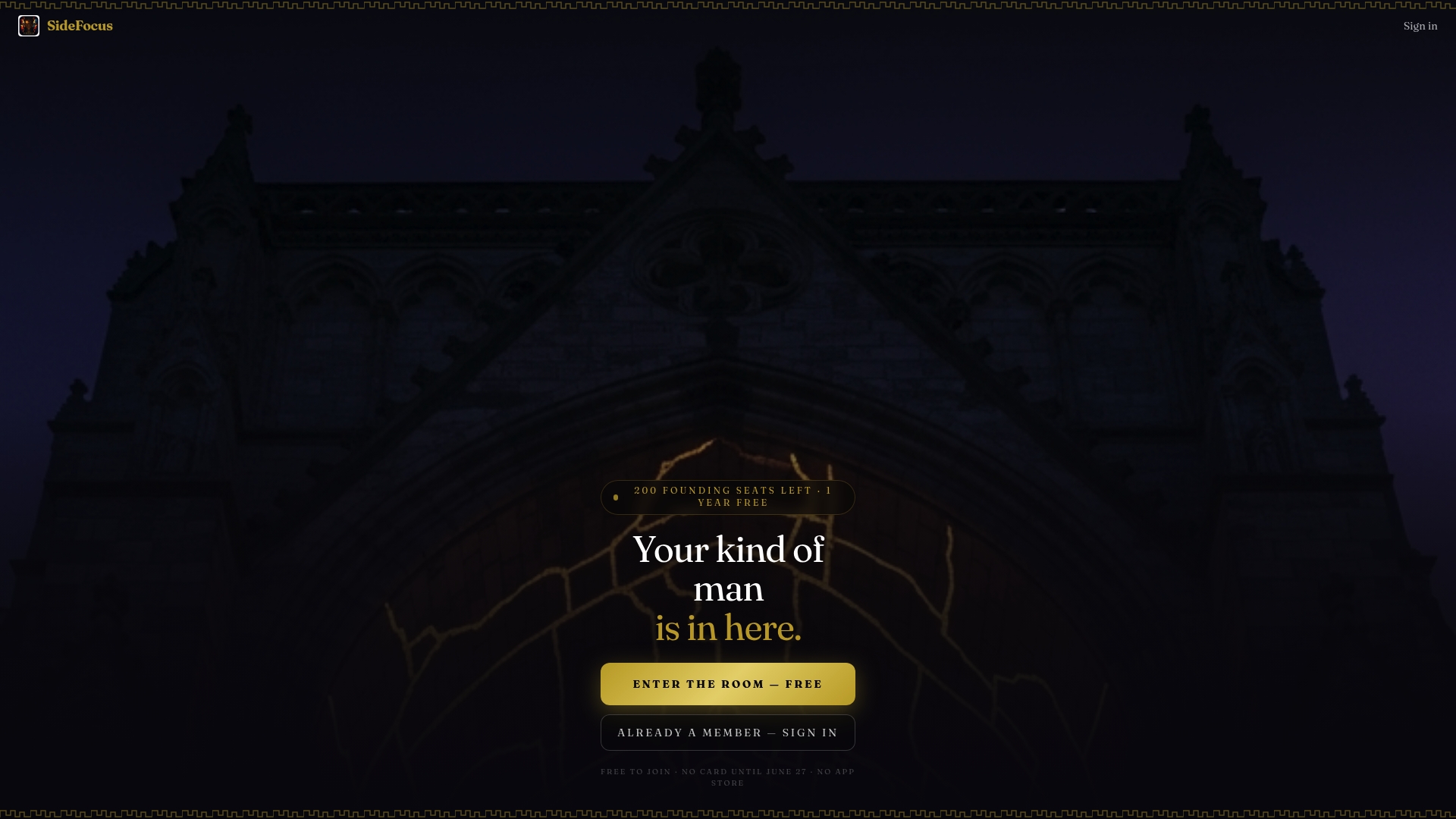
Sidefocusapp is a relationship platform designed specifically for men who identify as Sides. It centers emotional reciprocity, paced connection, and genuine warmth over performative swiping. There are no app store barriers, no match-count metrics, and no pressure to optimize your profile for algorithmic approval. Unlimited messaging and real community engagement mean you can build connection at your own pace without the burnout cycle that comes with mainstream platforms. If you are ready to be in a room where your relational style is recognized rather than misread, Sidefocusapp is that room.
FAQ
What does "Side" mean in a dating context?
A Side is a gay or bisexual man who prioritizes emotional intimacy, closeness, and warmth in relationships rather than performance-driven or role-defined dynamics. The identity centers genuine connection over conventional dating scripts.
Why do Sides experience more dating app burnout?
Sides invest emotionally and genuinely from early on, which means rejection cycles and ghosting hit harder. Research shows 78% of app users report emotional exhaustion, and Sides are particularly affected because app culture rewards intensity over the steady presence they offer.
How can Sides reduce ghosting in their dating lives?
Setting clear expectations about communication style in the first few exchanges filters out incompatible matches early. Explicitly naming your preference for steady, lower-intensity contact prevents your style from being misread as disinterest.
Is low confidence a permanent barrier for Sides in dating?
No. Low confidence in dating is largely structural, shaped by a culture that rewards performance over presence. Sides build genuine confidence by finding communities and platforms that recognize their relational style rather than penalize it.
What makes Sidefocusapp different from mainstream dating platforms?
Sidefocusapp is built specifically for Sides, prioritizing emotional reciprocity and paced connection over volume-based matching. It offers unlimited messaging and community engagement without the gamified mechanics that drive burnout on conventional apps.